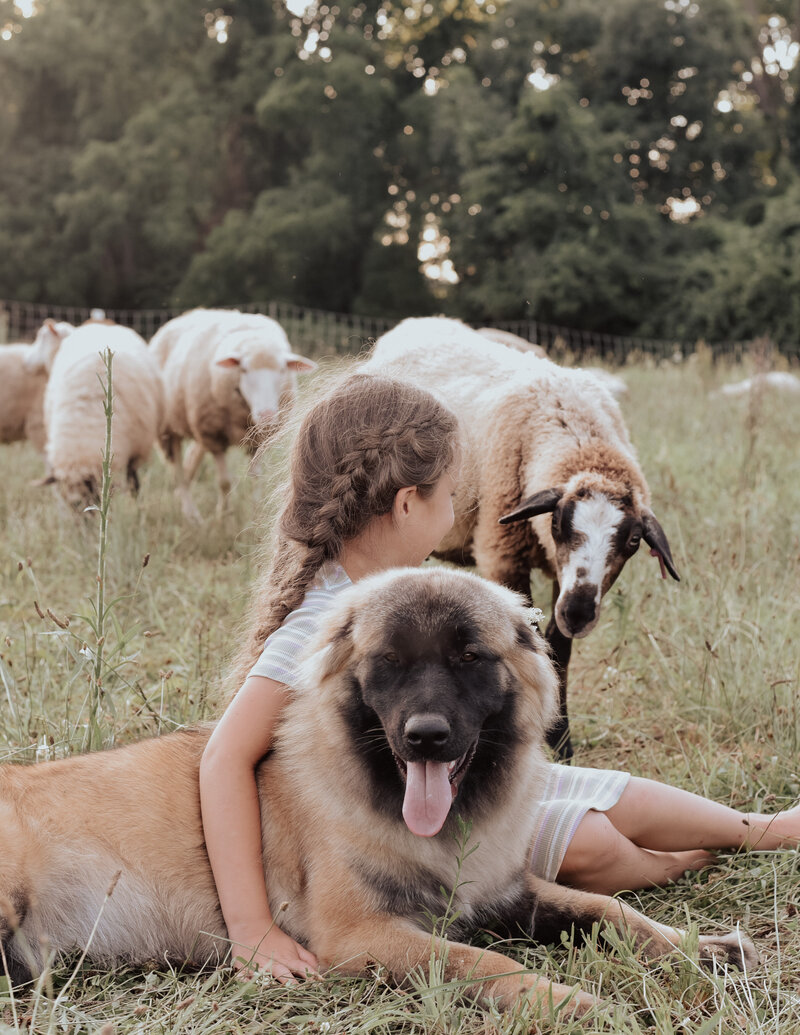
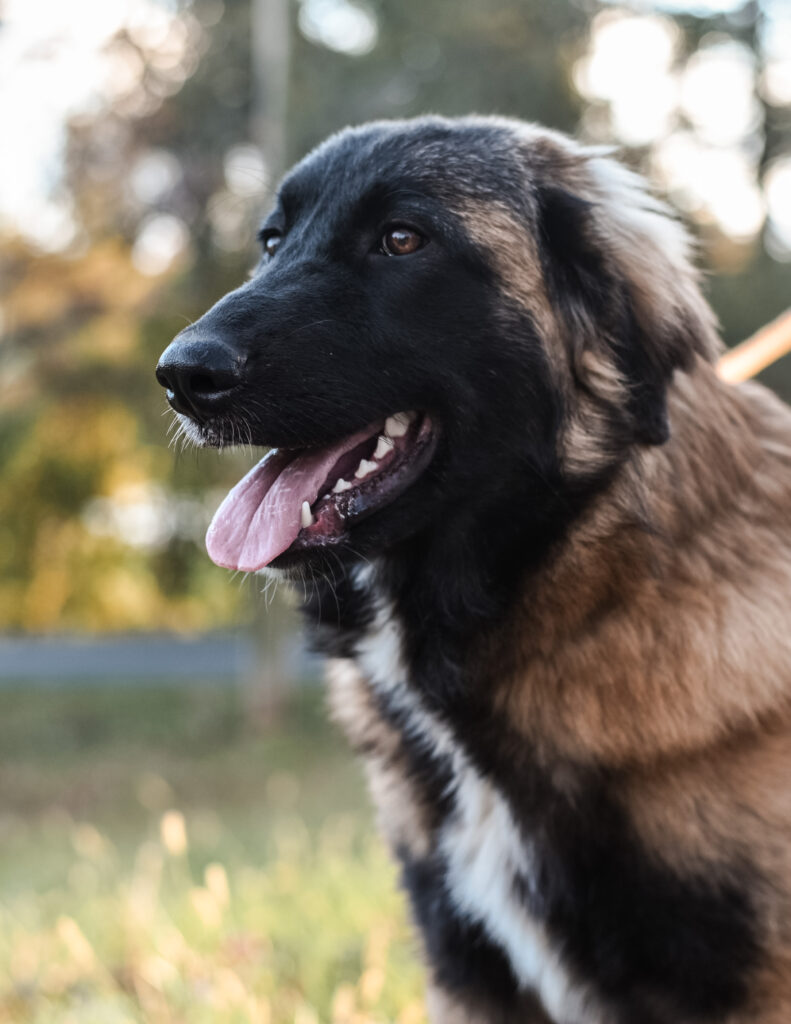
The Estrela Mountain Dog was developed as a dual purpose breed, capable of guarding livestock while living closely with its people. That foundation has not changed. What has changed is how Estrelas are bred and placed in modern settings.
Today, Estrelas may be bred or selected with different priorities depending on whether they are expected to live primarily as family companions, work as livestock guardians, or balance both roles. These differences affect behavior, daily expectations, and long term success in a home.
This page explains how breeding purpose influences temperament, training needs, and placement considerations. It is not about which type is better. It is about choosing the type that fits your environment and goals.
Companion/Show Lines vs Livestock Guardian Estrela Mountain Dogs
| Topic | Conformation-Leaning Estrela | Livestock Guardian-Leaning Estrela |
|---|---|---|
| Primary Placement Goal | Family living and household integration, show dogs | Livestock protection and territorial responsibility |
| Breeding Focus | Stability in human environments | Independence, guarding instinct, environmental judgment |
| Decision-Making Style | Looks to humans more often for guidance | Makes autonomous decisions, especially on territory |
| Independence Level | Moderate independence | Moderate independence |
| Tolerance for Household Activity | Varies by line, some are sharper or quicker to correct | Often more patient and steady when raised correctly |
| With Children | Can be less tolerant of chaos or rough handling in some lines | Often patient and protective with children in stable homes |
| Visitor Response | Neutral to reserved, may settle faster | Reserved to protective, slower acceptance |
| Territorial Behavior | Focused on home and immediate space | Focused on larger territory and livestock |
| Training Emphasis | Puppy classes, boundaries, neutrality | Environmental learning, management, clear territory |
| Obedience Expectations | Learns cues but not obedience driven | Obedience is secondary to judgment |
| Living Environment | Best in structured homes with predictable routines | Best on rural properties with space and clear boundaries |
| Common Placement Mistake | Expecting tolerance without structure | Expecting house-pet behavior without management |
| Best Success Factor | Calm leadership and consistent rules | Proper setup, fencing, and respect for independence |
| Key Risk if Misplaced | Snappiness or stress in chaotic homes | Frustration if independence is restricted |
What “Companion” and “Livestock Guardian” Mean in Estrelas Today
Historically, Estrelas lived alongside people while actively guarding livestock. They were expected to be adaptable, thoughtful, and capable of working independently without losing connection to their family.
In modern breeding and placement, those roles are often separated for practical reasons. Some Estrelas are bred with an emphasis on easier integration into family homes, while others are bred with a stronger focus on livestock protection and territorial responsibility.
Because of this, the labels “companion” and “livestock guardian” are used to describe how a dog is expected to live, not whether it is a true Estrela.
Labels matter because placement matters. A dog bred for intensive livestock guarding may struggle in a busy household, while a dog bred primarily for family living may not thrive in a full time guardian role without the right instincts or exposure.
Not all Estrelas express the same balance of guarding and companion traits. That balance is shaped by:
- Breeding focus
- Early environment
- Daily expectations
- Management style
Key clarification
Dual purpose is foundational to the Estrela Mountain Dog. However, how that dual purpose shows up in daily life varies depending on breeding focus and environment. Understanding that difference helps buyers choose the right dog and prevents avoidable mismatches.
Breeding Purpose and Selection Differences
How an Estrela Mountain Dog is bred has a real impact on how the dog behaves in daily life. While all true Estrelas share the same foundation, breeders often lean selection in one direction or another based on placement goals.
Companion-leaning Estrela breeding
Companion-leaning Estrelas are typically selected with family living in mind. These dogs are expected to integrate smoothly into a household while still retaining the core traits of the breed.
Breeding priorities often include:
- Strong family bonding and human engagement
- Greater tolerance for normal household activity
- Stability in mixed environments with visitors, children, and routine changes
These dogs are often better suited to homes where they will spend most of their time with people rather than working independently outdoors. They still retain guarding awareness, but it tends to express in a more contained and situational way.
Working LGD-leaning Estrela breeding
Estrelas bred with a stronger livestock guardian focus are selected primarily for their ability to protect territory and stock with minimal human direction.
Breeding priorities often include:
- Clear territorial boundaries
- Stronger guarding drive
- Higher independence and environmental sensitivity
These dogs tend to be more self-directed and less tolerant of busy or unpredictable environments. They are often most comfortable when given a defined area and a clear job rather than constant interaction with people.
Neither approach is better or worse. The difference lies in how the dog is expected to live and work on a daily basis.
Temperament Differences You Will Actually Notice
While genetics set the foundation, the differences between companion-leaning and working-leaning Estrelas become most obvious in everyday situations.
Decision-making and independence
Companion-leaning Estrelas tend to look to their owners more often for guidance, especially in familiar environments. They may pause, assess, and then engage with direction.
Working-leaning Estrelas are more likely to make decisions independently, particularly when they perceive a potential threat or change in their environment. What some owners interpret as stubbornness is usually the dog prioritizing assessment over immediate response.
Territorial behavior
Territorial behavior shows up differently depending on what the dog is guarding.
Estrelas guarding property often focus on boundaries, entrances, and familiar routines. Their guarding behavior is usually centered around the home and immediate surroundings.
Estrelas guarding livestock tend to work across larger areas and may patrol more extensively. The size and clarity of the territory influences how actively the dog guards and how much autonomy it expects.
As territory increases, independence often increases as well.
Stranger and visitor tolerance
Most Estrelas are neutral to suspicious by default, but how that neutrality expresses itself can vary.
Companion-leaning Estrelas may remain reserved but settle more quickly once visitors are accepted by the household. They are often observant rather than reactive.
Working-leaning Estrelas are more likely to remain cautious or protective, especially around unfamiliar people entering their territory. Acceptance tends to be slower and more deliberate.
Neutral behavior does not mean friendly, and reserved behavior does not mean aggressive. These responses are normal expressions of a guardian temperament shaped by purpose and environment.
Training Expectations for Each Type
Training an Estrela Mountain Dog always requires patience and consistency, but the training focus changes depending on how the dog is expected to live. Companion and working Estrelas benefit from many of the same foundations, yet the end goals are different.
Training a companion Estrela
Companion Estrelas benefit greatly from early training and structured exposure. Puppy classes, basic obedience, and controlled social experiences help them learn how to navigate the human world calmly.
Effective companion training focuses on:
- Puppy classes and structured exposure to people, places, and routines
- Clear household rules that remain consistent over time
- Teaching neutrality rather than constant social interaction
The goal is not a highly performative dog, but one that understands boundaries, settles easily, and responds reliably within a family environment.
Large breed puppies need early bite inhibition. This guide explains how to stop puppy biting fast without creating fear or aggression. See How to Stop Puppy Biting Fast
Training a working livestock guardian Estrela
Working Estrelas learn primarily through their environment. While basic training and handling are still important, obedience is not the primary measure of success.
Training for a working Estrela focuses on:
- Environmental learning and situational awareness
- Gradual exposure to livestock and territory
- Management strategies rather than constant control
These dogs are expected to make decisions independently. Training supports good judgment rather than trying to override instinct.
Important distinction
Training goals differ even when methods overlap. Companion Estrelas are trained to function smoothly within human households. Working Estrelas are trained to operate responsibly within a territory and livestock setting.
Daily Life Differences
The daily experience of living with an Estrela Mountain Dog varies significantly depending on whether the dog is placed as a companion or a livestock guardian.
Living with a companion Estrela
Companion Estrelas live closely with their people and tend to adapt to the rhythm of the household.
Daily life often includes:
- Predictable routines and clear expectations
- Thoughtful visitor management rather than open social access
- Consideration of whether the environment is suburban or rural
In suburban settings, fencing, neighbor proximity, and traffic matter. In rural homes, space and routine still matter, but pressure from constant activity is usually lower.
Living with a livestock guardian Estrela
Livestock guardian Estrelas live slightly different schedules then indoor Estrela’s. Their schedule is often dictated by environmental cues rather than household routines. They are normally more nocturnal and very active at dusk and dawn.
Daily life may include:
- Increased night activity and alerting
- Strong bonding to livestock alongside selective bonding with people
- High independence and comfort working without direct supervision
These dogs often patrol, observe, and respond based on their assessment of the environment. Expecting them to behave like house pets usually leads to frustration on both sides. They will be barking at night, and want to do their job.
Common Placement Mistakes
Most placement problems with Estrela Mountain Dogs are predictable. They happen when expectations are built around convenience, assumptions, or internet advice rather than how the breed actually functions.
Putting strong working lines into busy family homes
Dogs bred with a heavy livestock guardian focus are often placed into active family environments because the buyers like the idea of a “natural protector.” In practice, these dogs may struggle with constant movement, noise, visitors, and unclear territory. What the owner sees as behavior issues is often a working dog reacting to an environment it was never meant to manage.
Expecting a companion-leaning Estrela to fully guard livestock
Companion-leaning Estrelas still carry guardian instincts, but that does not automatically translate into effective livestock protection. Buyers sometimes assume that training alone will create a full working guardian. Without the right breeding focus, exposure, and environment, these dogs may lack the intensity or confidence needed for consistent livestock work.
Assuming training can override breeding purpose
Training is important, but it does not replace genetics. Many placement failures happen when buyers believe obedience, socialization, or experience can fully override breeding purpose. When training goals conflict with instinct, instinct usually wins.
Choosing based on availability instead of fit
Rarity and long waitlists can push buyers to take the puppy that is available rather than the puppy that fits. This often leads to mismatches that show up months or years later when guarding behavior, independence, or maturity increases.
Which Buyers Usually Get This Wrong
Some buyer profiles are more likely to struggle, not because they are irresponsible, but because expectations do not match how the breed develops.
First time LGD owners
People new to livestock guardian dogs often underestimate independence, night activity, and the need for management rather than control. Livestock Guardian dogs of any breed come with a learning curve and puppies especially take guidance to be trustworthy with stock and helpful farm citizens.
Families drawn to the breed’s appearance
The Estrela Mountain Dog is visually impressive. When appearance is the primary reason for choosing the breed, lifestyle fit is often overlooked. This is one of the most common causes of regret.
Buyers unfamiliar with guardian maturation timelines
Estrelas mature slowly. Guarding instincts, independence, and territorial awareness often develop later than expected. Buyers who assume early puppy behavior predicts adult temperament are often unprepared for adolescence and maturity.
People expecting one dog to perform every role equally in every environment
While the breed was developed as dual purpose, no single dog excels equally in all roles across all environments. Expecting perfect family companion behavior, full time livestock guarding, high social tolerance, and easy management from one dog can lead to frustration. These are the unicorns and yes, we would all love to have them. Occasionally, we get lucky.
How to Decide Which Type Fits Your Situation
Choosing between a companion-leaning or livestock guardian-leaning Estrela Mountain Dog starts with an honest look at how you live and what you expect the dog to manage every day.
Questions for companion buyers
Ask yourself:
- Household activity level
Is your home calm and predictable, or busy with frequent movement, noise, and schedule changes? Companion-leaning Estrelas do best in structured homes with clear routines. - Visitor frequency
Do you regularly host guests, clients, or extended family? Companion placements tend to handle controlled visitor exposure better, but even these dogs prefer management over open access. - Neighbor proximity
How close are your neighbors, and how much shared space exists? Fencing, visibility, and foot traffic all affect how comfortable an Estrela will be in a companion role.
If daily life involves frequent change, high traffic, or minimal structure, even a companion-leaning Estrela may struggle.
Questions for LGD buyers
For livestock guardian placements, the questions shift toward environment and responsibility.
Consider:
- Type of livestock
What animals will the dog be guarding, and how vulnerable are they? Different livestock require different levels of vigilance and engagement. - Property size and fencing
Large, clearly defined territories support successful guarding. Poor fencing or unclear boundaries often create problems that are blamed on the dog rather than the setup. - Willingness to manage independence
LGD Estrelas make decisions without constant human input. Owners must be comfortable guiding and managing behavior rather than controlling every action.
Successful LGD placements depend as much on management and environment as on the dog itself.
Can One Estrela Truly Do Both?
The Estrela Mountain Dog was developed as a dual purpose breed, and balanced dogs absolutely exist. However, dual purpose success depends on more than hope or training.
When balanced dual purpose works
Dual purpose works best when:
- The breeder selects for balance, not extremes
- The environment supports both family living and guarding responsibility
- The owner understands that one role may be stronger than the other
In these cases, the dog adapts naturally without being pushed beyond its capacity.
When it does not
Problems arise when:
- A heavily working-bred dog is expected to function like a social family pet
- A companion-leaning dog is expected to provide full time livestock protection
- Owners assume training can fully replace genetics
In these situations, frustration builds even though the dog is behaving as expected for its breeding.
Why breeder selection matters more than labels
Labels like companion, LGD, or dual purpose are only useful if the breeder understands how their dogs actually live and perform. Breeder selection matters more than terminology.
A good breeder matches dogs to environments honestly and helps buyers understand where balance exists and where it does not.
Frequently Asked Questions: Companion vs Livestock Guardian Estrela Mountain Dogs
Are companion and livestock guardian Estrelas different breeds?
No. They are the same breed. The difference comes from breeding focus, placement goals, and environment, not from the breed itself. All true Estrelas share the same foundational traits, but those traits express differently depending on selection and daily expectations.
Can a companion Estrela still guard my property?
Yes. Companion-leaning Estrelas still retain guarding awareness and territorial instincts. What they may not provide is full-time, autonomous livestock protection across large areas. Property awareness and alerting are common. Intensive guarding work requires the right genetics, exposure, and environment. Companion dogs generally want to be with humans and would not be super happy living full time with livestock.
Can a livestock guardian Estrela live as a house dog?
Sometimes, but it depends on the individual dog and the household. LGD-leaning Estrelas are often more suspicious with noise, movement, and visitor traffic. Homes with constant activity or unclear boundaries tend to be challenging for these dogs.
Is one type easier to train than the other?
Neither type is easier or harder. The training goals are different. Companion Estrelas are trained to integrate smoothly into human households. LGD Estrelas are trained to manage territory and livestock responsibly. Training success depends on matching expectations to purpose.
Do companion Estrelas lack working instincts?
No. Companion-leaning Estrelas still carry guardian instincts. The difference is intensity and expression. These dogs are often selected for stability in family environments and generally are content with humans rather than wanting full autonomy in large territories.
Do livestock guardian Estrelas bond with people?
Yes, but the bond often looks different. LGD Estrelas tend to bond strongly to place, routine, and responsibility as well as to their people. They may be less demonstrative but still deeply connected.
Can training make a companion Estrela into a full LGD?
Training alone cannot replace breeding focus. While exposure and management matter, a dog bred primarily for companion placement may not develop the confidence or consistency needed for full livestock guarding.
Can training soften a strong working Estrela for family life?
Training can help with management and boundaries, but it cannot remove core instincts. A strong working Estrela may always prefer structure, space, and autonomy over constant social interaction.
Why do people struggle when switching roles later?
Because purpose shows up with maturity. Many Estrelas seem flexible as puppies, then change as guarding instincts develop. Switching expectations later often leads to frustration because the dog is expressing traits that were always present genetically.
Is dual purpose unrealistic today?
No. Dual purpose is foundational to the breed. What is unrealistic is expecting every Estrela to express that balance equally in every environment. Balanced dogs exist, but success depends on breeding, placement, and owner expectations.
How do I know which type a breeder is producing?
Ask how the dogs live, not how they are labeled. Look at:
- Where the parents spend their time
- Whether they actively guard livestock
- How they behave with visitors
- How puppies are raised and placed
Breeders who understand their dogs can explain this clearly.
Is one type better for families with children?
Not always. Some Estrelas from show or companion-leaning lines can be more reactive, snippy, or quick to correct when children are loud, unpredictable, or physically pushy. That does not make them bad dogs. It means they may have lower tolerance for chaotic handling and may need more management around kids.
Working LGD leaning Estrelas are often more patient and protective with children, especially in stable households. These dogs tend to be used to movement, noise, and boundary testing from animals, and many have a steadier temperament when raised correctly. That said, they still need structure and supervision, because protective instincts and size can create risks if rules are unclear.
See Estrela Mountain Dogs and Children for more info.
Why do people say Estrelas are stubborn?
They are independent decision-makers. This shows up more strongly in working-leaning dogs, but all Estrelas think before responding. This is a guardian trait, not a training failure.
Can one Estrela do both family life and livestock guarding?
Yes, when:
- The breeder selects for balance
- The environment supports both roles
- The owner accepts that one role may be stronger
Problems arise when owners expect livestock guardian performance with show dogs that have been used for prey drive sports etc. Contrary to what some people might think, the livestock guardian dog Estrela’s are often milder mannered with humans then the show lines.
What is the biggest mistake buyers make with this breed?
Choosing based on availability, appearance, or labels instead of purpose and environment. Most placement failures come from mismatched expectations, not problem dogs.
Should I choose companion or LGD based on where I live?
Yes. Environment matters as much as breeding focus. Suburban and high-traffic homes usually align better with companion placements. Rural properties with livestock and clear boundaries align better with LGD placements. See How to Choose an Estrela Mountain Dog Puppy
What happens if I choose the wrong type?
Most Estrela’s are pretty flexible. But if there is a serious mismatch, frustration builds over time. Owners often feel like training is failing when the real issue is a mismatch between genetics and expectations. Early clarity prevents long-term conflict.
Final Perspective: Purpose/Genetics First, Dog Appearance Second
Estrela Mountain Dogs succeed when expectations match breeding focus and environment. Most problems occur not because the dog failed, but because the placement was mismatched from the start.
Misalignment causes frustration, not failure. Clarity protects both the dog and the owner and leads to far better long term outcomes.
Recap:
Companion and livestock guardian Estrela Mountain Dogs share the same foundation, but their daily needs and expectations can differ significantly. Choosing based on purpose, not labels, leads to better outcomes for both dog and owner.
Related Estrela Mountain Dog Resources
If you’re still learning about the Estrela Mountain Dog and deciding whether this breed is right for you, these guides may help:
- Estrela Mountain Dog Puppies for Sale
Learn about current and upcoming litters, placement process, and availability. - What Serious Estrela Mountain Dog Owners Need to Know
A realistic look at lifestyle fit, experience level, and common challenges. - Estrela Mountain Dog Temperament Explained
What to expect from this breed’s independence, guarding instincts, and maturity timeline. - Is an Estrela Mountain Dog Right for You
Breeding purpose, behavior, and placement considerations. - How Much Do Estrela Mountain Dog Puppies Cost?
What affects pricing, why quality puppies cost more, and what expenses to plan for. - How to Find an Ethical Estrela Mountain Dog Breeder
A practical checklist to help you evaluate breeders and avoid common red flags.
Sources & References
- Fédération Cynologique Internationale (FCI Breed Standard No. 173)
Official international breed standard describing purpose, temperament, and working traits of the Estrela Mountain Dog
https://www.fci.be/en/nomenclature/ESTRELA-MOUNTAIN-DOG-173.html - Clube Português de Canicultura
Country of origin authority with breed standard and preservation guidance
https://www.cpc.pt - American Kennel Club
General breed overview and temperament description for Estrela Mountain Dogs
https://www.akc.org/dog-breeds/estrela-mountain-dog/ - Orthopedic Foundation for Animals
Health testing context for large guardian breeds, relevant to breeding selection and placement
https://ofa.org - International Association of Canine Professionals
Education on guardian breeds, working dogs, and management focused training approaches
https://iacp.org - Better Breeder Institute
Ethical breeding, temperament selection, and placement best practices
https://betterbreederinstitute.com
Comments +