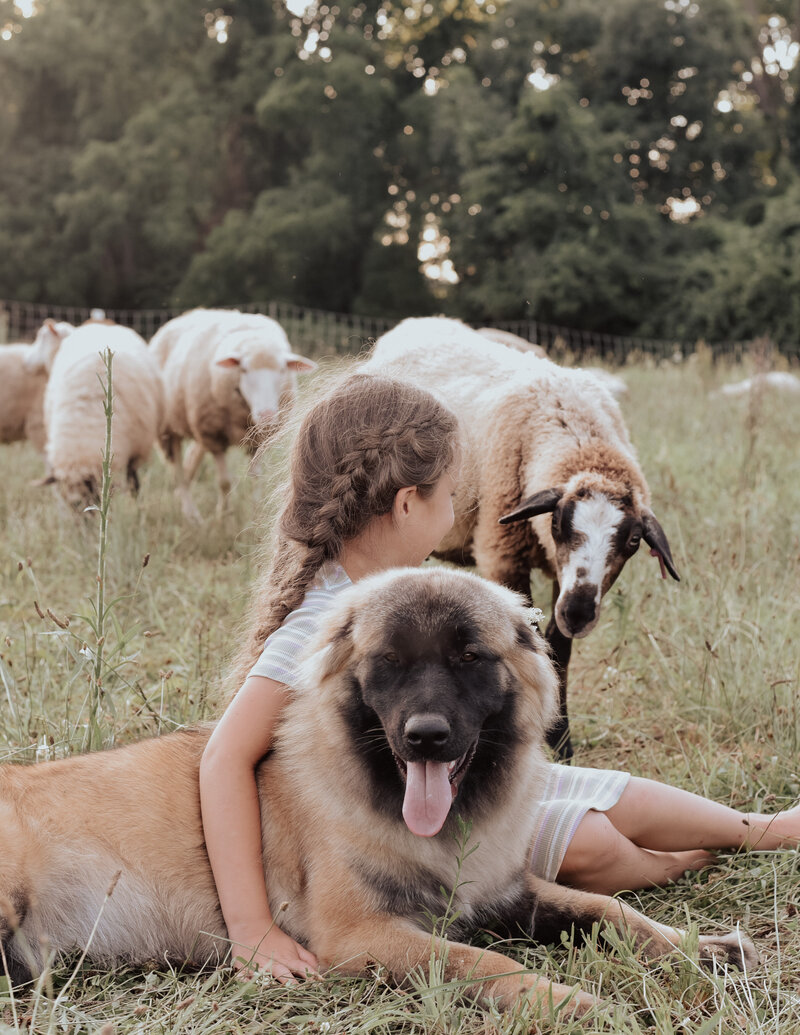
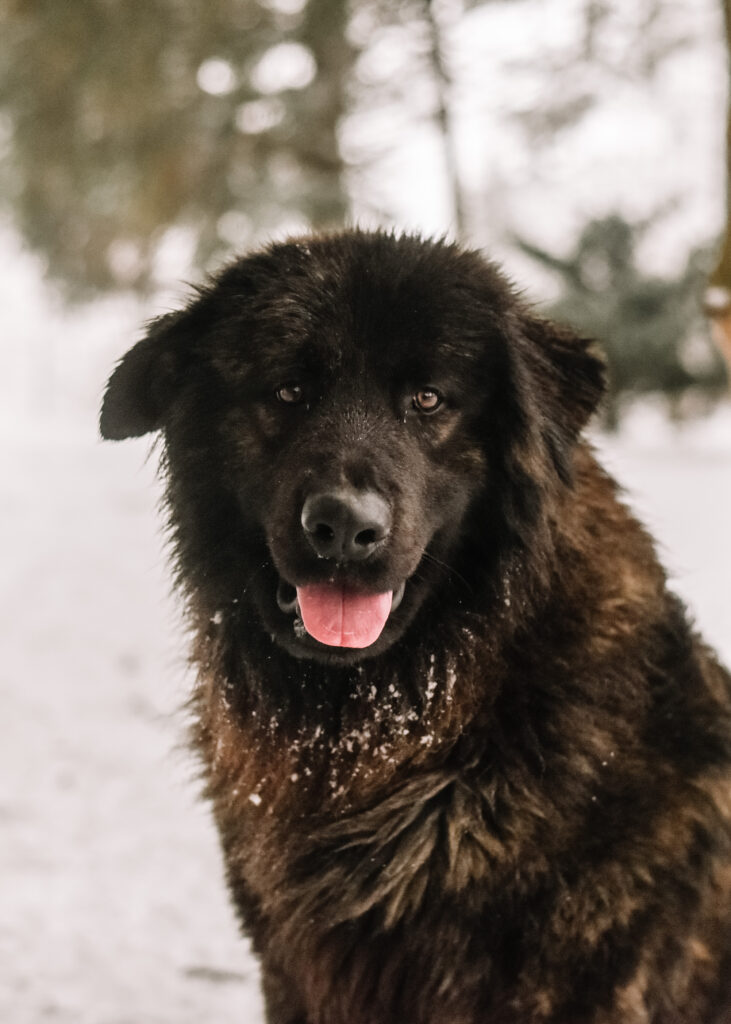
No — Estrela Mountain Dogs are not aggressive by nature.
They are serious guardian dogs with strong territorial instincts and the ability to escalate when a real threat is present. That distinction matters. Aggression is uncontrolled, indiscriminate behavior. Guardian behavior is context-dependent, judgment-based, and purposeful.
This question comes up so often online because Estrelas do not behave like social companion breeds. They are not universally friendly, novelty-seeking, or eager to please strangers. Their calm watchfulness, boundary enforcement, and willingness to confront predators are frequently misinterpreted as aggression by people unfamiliar with livestock guardian dogs.
This article is written for:
- Buyers trying to decide if an Estrela is the right breed
- Families considering a dual family-guardian role
- Farm and homestead owners evaluating real protection needs
The goal is clarity, not reassurance. Estrelas are not soft dogs, like a golden retriever, but they are not unstable ones either.
Estrela Mountain Dogs and Aggression — At-a-Glance Summary
| Topic | Key Takeaway |
|---|---|
| Breed purpose | The Estrela Mountain Dog is a guardian breed, not a pet guard dog |
| Aggression by nature | No — aggression is not a baseline trait |
| Default temperament | Calm, confident, watchful |
| Guarding style | Judgment-based with controlled escalation |
| Predator response | Will confront serious threats when required |
| Barking behavior | Boundary communication, not indiscriminate aggression |
| Territorial behavior | Normal and intentional, especially on home property |
| Behavior with family | Stable and reliable with structure and leadership |
| Behavior with strangers | Reserved and assessing, not socially outgoing |
| Visitor behavior | Boundary-based; requires owner-managed introductions |
| Livestock interaction | Low prey drive when raised with guidance |
| Poultry safety | High when early exposure and supervision are provided |
| Other dogs | Possible same-sex or territorial issues without management |
| True aggression red flags | Unprovoked biting, lack of recovery, no discrimination |
| Common mislabel cause | Poor placement, not poor temperament |
| Training role | Obedience and guidance reduce risk and confusion |
| Best environments | Farms, homesteads, structured family properties |
| Poor environments | Suburban pet homes without purpose or boundaries |
| Key owner requirement | Comfort with guardian traits and calm authority |
| Core truth | Guardian behavior often gets mislabeled as aggression |
Estrela Mountain Dogs are not aggressive by nature — they are serious guardian dogs whose behavior depends on placement, structure, and leadership.
What “Aggressive” Actually Means (And Why the Term Is Misused)
In discussions about guardian breeds, the word aggressive is often used inaccurately. True aggression refers to uncontrolled, indiscriminate behavior that lacks context, discrimination, or recovery. That is not the behavioral profile of a well-bred livestock guardian dog.
Aggression vs Territorial Behavior
Territorial behavior is contextual and location-based. A dog that postures, blocks access, or vocalizes at a boundary is enforcing space, not acting aggressively. This behavior turns off when the context changes or the boundary is respected.
Aggression vs Protective Behavior
Protective behavior is selective. It is directed toward perceived threats and de-escalates when the threat resolves. Aggression persists regardless of context. A guardian dog that allows normal activity, familiar people, and routine handling while remaining alert to intrusion is demonstrating protection, not aggression.
Aggression vs Threat Response
Threat response involves assessment, signaling, and escalation only if necessary. Aggression skips assessment and goes straight to conflict. Effective livestock guardian dogs use distance, posture, vocalization, and movement long before physical engagement.
Why LGDs Are Often Mislabeled as Aggressive
Livestock guardian dogs do not display the social signaling patterns people expect from companion breeds. They are aloof, reserved, and slow to engage. This lack of overt friendliness is frequently misread as hostility. Add barking, size, and territorial confidence, and the label “aggressive” gets applied where it does not belong.
Why Internet Advice Confuses Reactivity With Judgment
Online discussions often lump all intense behavior together. Reactivity is impulsive and emotion-driven. Judgment is deliberate and controlled. LGDs, including the Estrela, are bred for judgment under pressure. When that distinction is ignored, purposeful guardian behavior gets framed as a problem instead of a feature.
Estrela Mountain Dog Temperament Explained
The Estrela Mountain Dog temperament is built around restraint, awareness, and decisiveness, not constant engagement. Understanding this baseline is essential to interpreting their behavior accurately.
Calm, Confident, and Watchful
Default state
A stable Estrela is typically calm and settled. When nothing requires attention, the dog rests. This is not disengagement. It is efficiency.
Energy conservation
Estrelas are bred to work long hours and long seasons. Wasted energy equals vulnerability. Remaining still while monitoring the environment allows them to respond effectively when action is required.
Stillness vs reactivity
Stillness is often mistaken for passivity. In guardian dogs, it is the opposite. A dog that does not pace, spin, or vocalize unnecessarily is demonstrating confidence and control. Reactivity signals uncertainty. Stillness signals ownership.
Discerning, Not Hair-Trigger
How Estrelas assess before acting
Estrelas observe first. They read movement, intent, and persistence. Many situations resolve at the assessment stage without escalation. This ability to wait is a defining trait of a reliable guardian.
Why they do not escalate unnecessarily
Unnecessary escalation creates risk to livestock, humans, and the dog itself. Estrelas were selected to apply force only when lower-level deterrence fails. When they do escalate, it is purposeful, not emotional.
Are Estrela Mountain Dogs Aggressive With People?
Concerns about aggression toward people usually come from misunderstanding guardian behavior in a human context. Estrelas are not indiscriminately aggressive with people, but they are selective, territorial, and context-aware. How they behave depends heavily on familiarity, location, and leadership.
With Family Members
Bonding patterns
Estrelas form strong, steady bonds with their household. Their attachment is not clingy or attention-seeking, but it is deep. Once someone is part of the dog’s inner circle, they are treated as belonging to the territory.
Stability with familiar adults
With consistent adults, Estrelas are typically calm, predictable, and trustworthy. They do not cycle between friendliness and suspicion without reason. Clear routines and fair boundaries reinforce this stability and reduce unnecessary guarding behaviors inside the home.
Children and supervision realities
Estrelas can live successfully with children when adults manage the environment. They are large, powerful dogs with guardian instincts, not babysitters. Calm, respectful interactions are essential. Problems arise not from aggression, but from unmanaged chaos, rough handling, or adults expecting the dog to tolerate behavior it was never meant to tolerate.
With Strangers
Neutral vs suspicious
Estrelas are not socially neutral dogs in the way companion breeds are. They tend to be reserved with unfamiliar people. This reservation is not hostility. It is assessment. Many Estrelas observe quietly before deciding how to respond.
Territorial context matters
A stranger encountered off-property is often ignored or calmly observed. The same person approaching or entering the dog’s territory may receive a very different response. This shift reflects territorial awareness, not unstable temperament.
Why aloofness is not aggression
A dog that does not seek interaction, avoids eye contact, or positions itself between a stranger and the household is not being aggressive. It is doing exactly what a guardian dog is designed to do: monitor and control access.
With Visitors on Their Property
Boundary-based behavior
On their own property, Estrelas enforce boundaries. This may include standing ground, blocking paths, or vocalizing. These behaviors are intended to slow and assess, not to attack.
Owner responsibility in introductions
Successful introductions depend on the owner. Calm leadership, controlled movement, and clear signals from the handler tell the dog that the visitor is permitted. Expecting the dog to independently decide that every visitor is welcome is unrealistic and unfair.
Why expectations matter
Problems occur when owners expect Estrelas to behave like social hosts. This breed does not exist to greet guests when the owner is not home. It exists to protect territory. When expectations align with purpose, Estrelas are manageable, stable, and predictable around visitors.
Key Perspective
Estrela Mountain Dogs are not aggressive with people by default.
They are territorial guardians who discriminate based on context, familiarity, and leadership. When those elements are understood and managed, their behavior with people is not dangerous — it is intentional.
Are Estrela Mountain Dogs Aggressive With Other Animals?
Concerns about aggression toward animals usually stem from applying pet-dog expectations to a guardian breed. Estrelas are not indiscriminately aggressive with other animals, but they are purposeful. How they behave depends on early guidance, context, and management, not randomness.
With Livestock
Low prey drive when raised correctly
Well-bred Estrelas have a naturally low prey drive toward livestock when they are raised with early, structured exposure. Calm neutrality around stock is the goal. This does not happen automatically. It is guided during development and reinforced through routine.
Guarding vs harassment
Guarding behavior includes positioning, monitoring, and responding to threats. Harassment includes chasing, mouthing, or repeatedly pressuring animals. The difference is not instinct. It is management. Estrelas that are corrected early and consistently learn appropriate proximity and restraint. Dogs allowed to rehearse harassment behaviors often continue them, regardless of breed.
See Estrela Mountain Dogs as Livestock Guardian Dogs for more info.
With Other Dogs
Same-sex dynamics
Like many serious working breeds, Estrelas can show same-sex intolerance, especially in adulthood. This is not universal, but it is common enough to require honest consideration when placing multiple dogs together.
Territory-related issues
Issues with other dogs most often arise around territory. An unfamiliar dog entering an Estrela’s space may be treated as a potential threat until assessed. This behavior is context-driven, not generalized aggression.
Management and structure
Successful multi-dog households rely on clear rules, controlled introductions, and consistent leadership. Estrelas do best when expectations are enforced calmly and early. Problems escalate when owners assume dogs will “work it out” on their own.
With Pets (Cats, Poultry, Small Animals)
Early exposure importance
Early, supervised exposure is critical. Estrelas introduced to cats, poultry, or small animals during developmental windows learn that these animals are part of the protected environment, not objects of interest.
Guidance vs assumption
Assuming instinct will resolve everything is a common mistake. Young Estrelas must be guided to leave cats alone, ignore fluttering birds, and move calmly through small animals. Long lines, supervision, and immediate interruption of inappropriate behavior prevent habits from forming.
Key Takeaway
Estrela Mountain Dogs are not aggressive with other animals by default.
They are discriminating guardians whose behavior reflects what they were taught to protect, how early guidance was provided, and whether management remained consistent.
Guardian Instinct vs Aggression
People often label guardian behavior as aggression because they misunderstand what effective protection looks like. Confronting predators is not aggression. It is the core job of a livestock guardian dog.
Why Confronting Predators Does Not Equal Aggression
Aggression lacks context and control. Guardian behavior operates with purpose. When an Estrela confronts a threat, the dog responds to pressure, location, and persistence. The goal is deterrence, not violence. Most encounters end when the predator retreats.
Wolves, Bears, and Serious Threats
Estrelas were developed to protect livestock under real predator pressure. Wolves, bears, and large predators do not retreat from noise alone. When presence and posturing fail, Estrelas advance, chase, and engage if necessary. This response reflects functional courage, not unstable temperament.
A dog unwilling to confront serious threats cannot perform guardian work. Avoidance in these situations leads to livestock loss.
Controlled Escalation vs Uncontrolled Attack
Effective guardians escalate in stages. They signal, posture, advance, and apply force only if the threat persists. Once the threat disengages, the guardian disengages. Uncontrolled attack looks very different. It continues regardless of outcome or context.
Estrelas demonstrate restraint because restraint preserves livestock safety, reduces injury risk, and prevents unnecessary conflict.
Why Effective LGDs Must Be Capable of Force
Deterrence works only when backed by the ability to act. Predators recognize bluffing quickly. An LGD that cannot follow through invites repeated testing. Estrelas succeed because they combine calm authority with the willingness to use force when required.
What Causes Estrelas to Be Perceived as Aggressive?
When Estrelas get labeled aggressive, the cause almost always traces back to management and placement, not breed temperament.
Poor Breeding
Unstable lines often lack consistent nerve, judgment, or recovery. Dogs from these backgrounds may overreact or fail to discriminate. Ethical breeding prioritizes stability, pressure tolerance, and predictability.
Lack of Early Guidance and Obedience
Without early guidance, dogs practice whatever behavior feels rewarding. Chasing, fixating, or boundary pushing becomes habit. Obedience provides clarity. It allows owners to interrupt problems before they escalate.
Inappropriate Placement
Suburban environments amplify conflict. Noise complaints, restricted movement, and constant stimulation create frustration. Estrelas need purpose. Without it, normal guardian behavior gets misinterpreted as aggression.
Inconsistent Boundaries
Dogs enforce boundaries when humans fail to do so. Unclear rules force the dog to decide what matters. That responsibility often looks like over-guarding.
Owner Fear or Insecurity
Dogs read hesitation quickly. When owners act uncertain, dogs compensate by taking control. Calm, confident leadership reduces unnecessary guarding far more effectively than correction alone.
Aggression Red Flags vs Normal Guardian Behavior
People often mislabel normal livestock guardian behavior as aggression because they expect guardian dogs to behave like social companion breeds. The difference between healthy guardian behavior and true aggression lies in context, control, and recovery. Understanding this distinction prevents unnecessary rehoming, overcorrection, and unsafe placements.
Normal LGD Behavior
These behaviors reflect purposeful, controlled guarding, not instability. A well-bred, well-managed Estrela uses these tools to protect territory and livestock without unnecessary escalation.
Posturing
A guardian dog uses body language first. An Estrela may stand tall, stiffen slightly, block movement, or place itself between a perceived threat and what it protects. This posture communicates ownership and intent without physical contact. Posturing often resolves situations before they escalate.
Barking at boundaries
Boundary barking announces territory and deters approach. Estrelas bark to create distance, not to attack. This barking usually has a clear trigger and stops once the pressure passes. Strategic barking is a sign that the dog understands where its responsibility lies.
Standing ground
Effective guardians do not flee or rush blindly. An Estrela may hold position and refuse to yield space. Standing ground shows confidence and judgment. This behavior becomes especially visible with unfamiliar people, animals, or predators approaching the property.
These behaviors are situational and controllable. The dog can disengage, redirect, or settle once the situation changes.
True Red Flags
These behaviors indicate a serious problem that requires professional evaluation. They are not normal expressions of guardian instinct.
Unprovoked biting
Biting without context, warning, or escalation signals instability. A guardian dog should communicate clearly before any physical contact. Sudden, unexplained biting is not protective behavior.
Inability to recover
Healthy guardians return to baseline after a perceived threat passes. A dog that remains agitated, fixated, or escalated long after the situation ends shows poor emotional regulation. Lack of recovery increases risk over time.
Lack of discrimination
A guardian must distinguish between real threats and normal activity. Dogs that react the same way to livestock, family members, visitors, and neutral stimuli lack judgment. This pattern reflects either poor breeding, poor guidance, or both.
Resource guarding people excessively
Protecting territory differs from guarding people obsessively. A dog that blocks family members from each other, reacts aggressively when someone approaches the owner, or treats all human interaction as a threat crosses into dangerous behavior. Guardian dogs protect space and stock, not ownership of people.
How to Use This Section Correctly
- Do not correct normal guardian behavior into suppression
- Do intervene early when red flags appear
- Evaluate behavior in context, not isolation
- Prioritize structure, guidance, and clear boundaries
Recap
A stable Estrela Mountain Dog shows restraint, discrimination, and recovery.
Aggression lacks all three.
Knowing the difference protects the dog, the livestock, and the people relying on both.
Can Estrela Mountain Dogs Be Safe Family Dogs?
Yes — with structure.
Estrela Mountain Dogs can live safely and successfully in family environments when adults manage the household intentionally and respect the breed’s purpose. These dogs do not thrive in chaos, permissiveness, or unclear leadership.
Why Structure Matters
Structure gives an Estrela clarity. Clear routines, consistent rules, and predictable boundaries tell the dog what matters and what does not. When adults set expectations, the dog does not feel pressure to decide everything on its own.
Structure includes:
- Defined spaces where the dog rests without interruption
- Clear rules for greetings, handling, and movement in the home
- Consistent enforcement of boundaries by all adults
When structure exists, Estrelas settle. They observe instead of intervene.
Why Rules Matter
Rules protect everyone involved. An Estrela does not guess which behaviors are acceptable. It follows what the household enforces.
Rules should cover:
- How children interact with the dog
- When and how visitors enter the home
- Where the dog sleeps and relaxes
- How the dog transitions between house and property
Without rules, the dog fills the gap. That often leads to over-guarding, stress, or unnecessary confrontation.
Why Chaos Creates Problems
Chaos forces guardian dogs to compensate. Loud, unpredictable environments with no adult control push Estrelas into constant assessment mode. When nothing feels managed, the dog attempts to manage everything.
Common chaos triggers include:
- Unsupervised children
- Inconsistent routines
- Constant new visitors without controlled introductions
- Mixed messages from different adults
Chaos does not cause aggression. It creates pressure that leads to guarding behaviors appearing in the wrong places.
Family Guardian vs Pet
A family guardian is not a pet with protection instincts. It is a working dog integrated into family life with a role and limits.
Key differences:
- Family guardians observe more than they seek attention
- Pets prioritize social engagement and novelty
- Family guardians protect space and routine
- Pets are there to just go for the ride
Families who expect pet behavior often feel disappointed. Families who respect guardian behavior build long-term success.
Who Should NOT Own an Estrela Mountain Dog
Estrela Mountain Dogs excel in the right homes. They struggle in mismatched ones. This section exists to prevent preventable failures.
People Wanting a Social Butterfly
Estrelas do not seek constant interaction with strangers. They remain reserved and selective. People who want a universally friendly dog will misinterpret normal guardian behavior as a flaw.
Hands-Off Owners
These dogs require guidance, especially during adolescence. Owners who believe LGDs raise themselves often create roaming, barking, and boundary issues that could have been prevented.
Suburban/Apartment Homes Without Purpose
Without livestock, land responsibility, or a clear guardian role, Estrelas often feel underutilized. Suburban settings amplify noise complaints, frustration, and conflict with neighbors.
Those Uncomfortable With Guardian Traits
Estrelas stand ground, assess threats, and enforce boundaries. Owners uncomfortable with territorial behavior, independence, or controlled confrontation should choose a different breed.
Final Reality Check
Estrela Mountain Dogs are not difficult dogs.
They are purpose-driven dogs.
When families provide structure, rules, and leadership, Estrelas become stable, trustworthy guardians. When families expect pet behavior without responsibility, problems follow.
Why Ethical Breeders Do Not Breed for “Softness”
Ethical breeders do not try to make Estrela Mountain Dogs “softer” to appeal to broader markets. They breed for stability, judgment, and functional courage. Softening guardian instincts does not make dogs safer. It can make them less predictable and less reliable.
Why Watering Down Instinct Creates Instability
Guardian dogs need clear, intact instincts to understand their role. When breeders dilute guarding traits to reduce intensity, they often remove the dog’s ability to assess and resolve pressure. What remains is uncertainty.
Instability shows up as:
- Nervous reactivity instead of confident assessment
- Excessive barking without follow-through
- Overattachment to people paired with poor territory awareness
- Fear-based responses rather than controlled escalation
A dog without clear instinct still encounters pressure, but lacks the internal framework to respond appropriately.
Balance vs Suppression
Ethical breeding aims for balance, not suppression. Balance preserves the dog’s ability to guard while maintaining emotional stability and recovery.
Balanced guardians:
- Observe before reacting
- Escalate only when needed
- Disengage once a threat retreats
- Recover quickly and return to baseline
Suppressed dogs hesitate, overreact, or oscillate between extremes. They do not trust their own judgment, which forces owners to intervene constantly.
Why Calm Confidence Is the Goal
Calm confidence allows a guardian to function without chaos. A calm Estrela does not need to prove itself. It holds territory, monitors pressure, and acts decisively when required.
Ethical breeders select for:
- Nerve strength under stress
- Predictable behavior across environments
- Clear discrimination between threat and normal activity
- Stability with familiar people and livestock
Calm confidence protects livestock more reliably than fear-based intensity ever could.
Ethical breeders protect instinct because instinct creates clarity.
Clarity produces confidence.
Confidence produces safe, reliable guardians.
Frequently Asked Questions: Estrela Mountain Dogs and Aggression
Are Estrela Mountain Dogs aggressive?
No. Estrela Mountain Dogs are not aggressive by nature. They are territorial livestock guardian dogs that assess, deter, and escalate only when a real threat persists. Their behavior is controlled and context-driven, not indiscriminate.
Why do people think Estrela Mountain Dogs are aggressive?
People often confuse guardian behavior with aggression. Aloofness, boundary barking, posturing, and standing ground look intimidating to those unfamiliar with LGDs, especially when compared to social companion breeds.
Are Estrela Mountain Dogs dangerous?
They are not dangerous when placed correctly. They can be dangerous in mismatched homes, particularly where owners lack structure, boundaries, or comfort with guardian traits.
Are Estrelas aggressive with their owners?
No. With consistent, familiar adults, Estrelas are typically calm, stable, and deeply loyal. Problems arise when owners provide inconsistent leadership or reinforce insecurity.
Are Estrelas aggressive with children?
Not inherently. Estrelas can live safely with children when adults supervise and enforce rules. Issues usually stem from unmanaged chaos, rough handling, or unrealistic expectations, not aggression.
Will an Estrela bite a stranger?
A stable Estrela does not bite without warning. They posture, bark, block access, and assess first. Biting without context is a red flag and not normal guardian behavior.
Are Estrelas aggressive toward visitors?
They are territorial, not aggressive. On their property, Estrelas monitor and control access. Owners must manage introductions calmly. Expecting a guardian dog to greet visitors like a pet is unrealistic.
Are Estrela Mountain Dogs aggressive with other dogs?
They can show same-sex intolerance and territorial behavior, especially in adulthood. With structure, controlled introductions, and clear rules, many Estrelas coexist successfully with other dogs.
Are Estrelas aggressive with livestock?
No. Well-bred Estrelas have a low prey drive toward livestock when raised correctly. Chasing or mouthing livestock indicates a guidance failure, not aggression.
Are Estrelas safe with poultry?
Yes, when raised with early exposure, supervision, and clear rules. Poultry problems almost always result from late exposure or lack of guidance, not instinct.
Are Estrelas aggressive with cats or small pets?
They can live safely with cats and small animals when introduced early and guided consistently. Assuming instinct will handle it without training often causes problems.
Do Estrelas attack predators?
They confront predators when necessary. Confronting wolves or bears is guardian work, not aggression. Effective LGDs must be capable of force or predators will not respect them.
Are Estrelas too aggressive for small acreage farms?
No. Estrelas are one of the best LGDs for small to mid-sized acreage because they combine real deterrence with judgment and restraint.
Do Estrelas bark aggressively?
Barking is communication and deterrence. Chronic or frantic barking signals a management issue, not aggression.
Are Estrelas reactive dogs?
No. Reactivity is impulsive and emotional. Estrelas operate through assessment and restraint. When reactivity appears, it usually points to poor breeding or poor management.
Can training make Estrelas aggressive?
No. Proper obedience training reduces risk. Lack of training allows unsafe behaviors to form. Obedience gives clarity and control.
Can Estrelas be trained not to be aggressive?
They do not need aggression removed. They need structure, guidance, and boundaries so guardian instincts express correctly.
At what age do Estrelas calm down?
Most Estrelas mature mentally between 18 and 30 months. Adolescence often looks intense but stabilizes with guidance.
Are Estrelas banned or restricted breeds?
Generally no, but local regulations vary. Restrictions usually relate to size or guarding reputation, not documented aggression.
Are male Estrelas more aggressive than females?
Not inherently. Individual temperament, breeding, and management matter far more than sex.
Are Estrelas harder to manage than other LGDs?
They are not harder, but they are less forgiving of poor structure. Owners must be intentional.
What are true aggression red flags in Estrelas?
Unprovoked biting, inability to recover, lack of discrimination, and excessive guarding of people indicate serious issues and require professional evaluation.
Can Estrelas be safe family dogs?
Yes — with structure, rules, and adult leadership. They are family guardians, not casual pets.
Who should not own an Estrela Mountain Dog?
People wanting a social butterfly, hands-off owners, suburban homes without purpose, and anyone uncomfortable with territorial guardian behavior.
Final Perspective
Estrela Mountain Dogs are not aggressive dogs.
They are serious guardian dogs with the ability to escalate when required.
In the right environment, that ability shows up as calm authority, restraint, and judgment. The dog observes, assesses, and resolves pressure without chaos or unnecessary force. This is what effective guardianship looks like.
In the wrong environment, the same traits get misunderstood. Territorial awareness becomes “suspicion.” Boundary enforcement becomes “aggression.” A dog bred to guard ends up placed where guarding is neither needed nor managed.
The difference is not the dog.
It is the placement, structure, and leadership surrounding it.
When those align, the Estrela Mountain Dog proves exactly what it was bred to be: a stable, discerning, and reliable guardian.
Related Estrela Mountain Dog Resources
If you’re still learning about the Estrela Mountain Dog and deciding whether this breed is right for you, these posts may help:
- Estrela Mountain Dog Puppies for Sale
Learn about current and upcoming litters, placement process, and availability. - Frequently Asked Questions About Estrela Mountain Dogs See the most asked questions and answers about Estrela Dogs.
- Estrela Mountain Dog Health The Estrela Mountain Dog is widely regarded as a hardy, long-lived livestock guardian breed when bred and raised correctly
- What Serious Estrela Mountain Dog Owners Need to Know
A realistic look at lifestyle fit, experience level, and common challenges. - Estrela Mountain Dog Temperament Explained
What to expect from this breed’s independence, guarding instincts, and maturity timeline. - Is an Estrela Mountain Dog Right for You
Breeding purpose, behavior, and placement considerations. - Companion vs Livestock Guardian Estrela Mountain Dogs
Key differences in breeding purpose, behavior, and placement considerations. - How to Find an Ethical Estrela Mountain Dog Breeder
A practical checklist to help you evaluate breeders and avoid common red flags. - How Much Do Estrela Mountain Dog Puppies Cost?
What affects pricing, why quality puppies cost more, and what expenses to plan for. - Estrela Mountain Dog Barking Why they bark and how to manage it.
Sources & Further Reading
Livestock Guardian Dogs: Behavior, Aggression, and Function
- USDA National Agricultural Library – Livestock Guardian Dogs
https://www.nal.usda.gov/animal-health-and-welfare/livestock-guardian-dogs - Texas A&M AgriLife Extension – Livestock Guardian Dogs
https://agrilifeextension.tamu.edu/library/ranching/livestock-guardian-dogs/ - Oregon State University Extension – Using Livestock Guardian Dogs
https://extension.oregonstate.edu/animals-livestock/sheep-goats/using-livestock-guardian-dogs - Utah State University Extension – Livestock Guardian Dog Behavior and Management
https://extension.usu.edu/sheep_goats/research/lgd-behavior-training
Aggression vs Guardian Behavior
- University of California ANR – Livestock Guardian Dogs and Predator Control
https://ucanr.edu/sites/UCCE_LR/files/17903.pdf - USDA Wildlife Services – Nonlethal Predator Control and LGDs
https://www.aphis.usda.gov/aphis/ourfocus/wildlifedamage/sa_program_overview/ct_predator_damage - National Sheep Industry Improvement Center – Predator Management and Guardian Dogs
https://www.nationalsheep.org/resources/predator-management/
Estrela Mountain Dog Breed Purpose & Temperament
- Fédération Cynologique Internationale (FCI) – Estrela Mountain Dog Breed Standard
https://www.fci.be/en/nomenclature/ESTRELA-MOUNTAIN-DOG-173.html - Clube Português de Canicultura – Estrela Mountain Dog Standard
https://www.cpc.pt/racas/estrela/ - Museu do Cão da Serra da Estrela (Portugal) – Historical Working Use
https://www.museudocao.pt/
Comments +