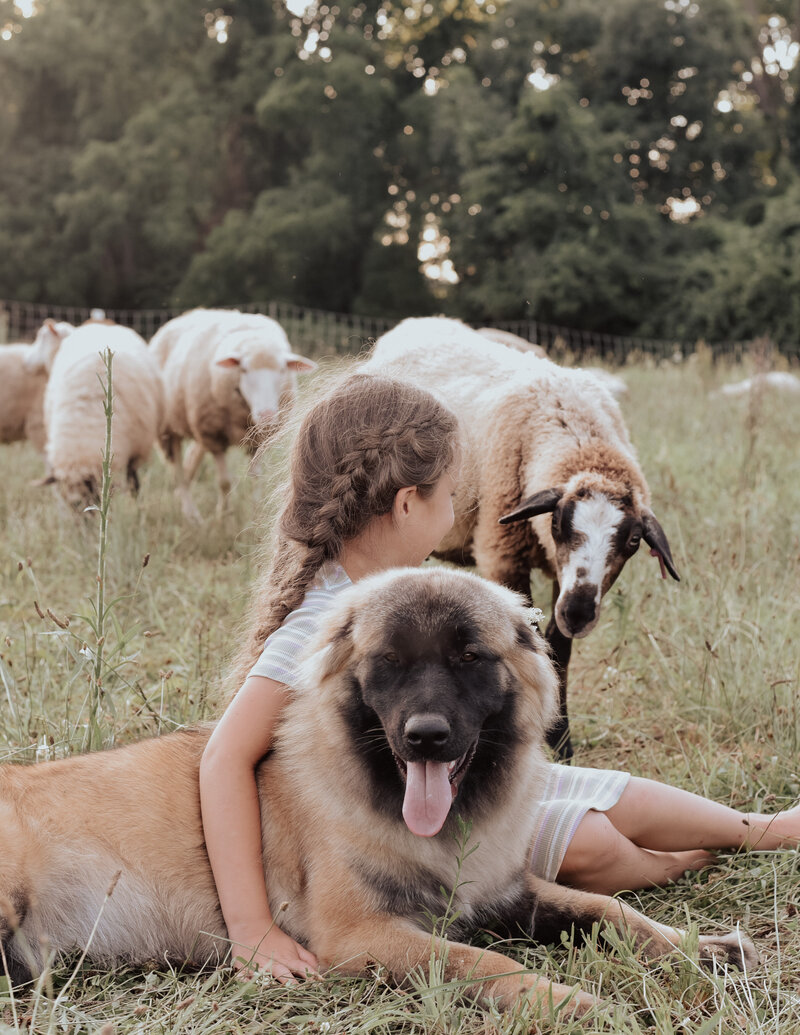

Estrela Mountain Dogs as a livestock guardian dog are one of the most effective, balanced, and historically proven LGD options for modern farms, combining real predator deterrence with judgment, stability, and strong territorial instincts.
Developed to guard sheep and farms under serious predator pressure, the Estrela Mountain Dog excels at protecting livestock without constant aggression or chaotic behavior. This guide explains how Estrelas work as LGDs, what environments they succeed in, how they compare to other guardian breeds, and what it truly takes to raise, train, and manage an Estrela Mountain Dog for reliable livestock protection.
Estrela Mountain Dogs as a Livestock Guardian Dog Summary
| Topic | Key Takeaway |
|---|---|
| Breed role | Estrela Mountain Dog is a true livestock guardian dog, not a perimeter-only or pet-based guard |
| Guarding style | Judgment-based, territorial, capable of escalation when required |
| Predator pressure | Effective against serious predators, including wolves and bears |
| Temperament | Calm, confident, discerning rather than reactive |
| Aggression level | Not indiscriminately aggressive; escalates appropriately |
| Best acreage | Small to mid-sized farms with defined boundaries |
| Livestock types | Sheep, goats, poultry, cattle, mixed species |
| Poultry reliability | High when raised correctly with early guidance |
| Barking behavior | Purposeful and situational, not constant |
| Night management | Often benefits from indoor rest on small or neighbor-adjacent properties |
| Obedience | Essential for safety, boundary respect, and long-term success |
| Training approach | Guidance-focused with early intervention and clear rules |
| Maturity timeline | Reliable guarding typically between 18–30 months |
| Family compatibility | Works well on family farms with structure and supervision |
| Roaming risk | Low with proper fencing, recall, and management |
| Human tolerance | Generally socially stable with familiar people |
| Common failure cause | Poor placement or lack of guidance, not lack of instinct |
| Ideal owner | Engaged, consistent, values calm authority over chaos |
| Poor fit | Suburban pet homes, hands-off owners, instant-results expectations |
| Long-term commitment | 10–12 year working partnership |
Estrela Mountain Dogs are balanced, serious livestock guardian dogs that combine real predator deterrence with judgment, stability, and long-term reliability when placed and managed correctly.
What is a Livestock Guardian Dog?
A livestock guardian dog (LGD) is a purpose-bred working dog whose primary role is to live with livestock and protect them from predators through presence, territorial control, and judgment. LGDs are not trained to chase threats or respond to commands on cue. Instead, they are selected for instincts that allow them to make independent decisions in complex, real-world environments.
Core LGD Traits
Territorial bonding
LGDs bond first to place and stock, not to a handler. Their sense of responsibility comes from ownership of territory rather than obedience to people. This is why effective LGDs patrol, posture, and remain vigilant even when no humans are present.
Low prey drive
True LGDs are bred to coexist calmly with vulnerable animals. A low prey drive allows them to move through flocks without triggering chase behavior, even when animals scatter, vocalize, or move suddenly.
Independent decision-making
LGDs must assess threats without human input. They decide when to escalate, when to observe, and when to conserve energy. This independence is not defiance. It is the defining feature of functional guardian work.
How LGDs Differ From Other Dog Types
LGDs vs herding breeds
Herding dogs are genetically programmed to control movement through eye, pressure, and pursuit. These traits conflict with livestock guardianship. A dog that feels compelled to move stock cannot simultaneously provide calm, stabilizing protection.
LGDs vs protection or guard dogs
Protection dogs are trained to respond to handlers and engage threats directly. LGDs rely on deterrence, posture, and territorial authority, not pursuit or bite work. A good LGD resolves most threats without physical confrontation.
LGDs vs pet guardian mixes
Pet guardian mixes often display alert barking or reactivity without the judgment, endurance, or discrimination required for real livestock protection. Alerting is not guarding. True LGDs remain effective even when no one is watching.
Why LGDs Cannot Be Trained Like Obedience Dogs
LGDs are not designed for constant direction or repetitive command-based training. Overemphasis on obedience can suppress critical instincts such as boundary awareness, threat assessment, and autonomous response.
Training for LGDs focuses on management, boundaries, handling tolerance, and situational guidance, not control. A successful LGD is shaped through environment and experience more than formal drills.
The Estrela Mountain Dog’s History as a Guardian
The Estrela Mountain Dog originates from Portugal’s Serra da Estrela region, one of the oldest pastoral landscapes in Europe. This mountainous area required dogs capable of guarding livestock across harsh terrain, extreme weather, and long periods without human oversight.
Historical Role in Livestock Protection
Sheep flocks
Estrelas were developed to live full-time with sheep, maintaining calm order within flocks while deterring wolves and human thieves. Their effectiveness relied on consistency and presence rather than speed or aggression.
Transhumance routes
Seasonal movement of livestock required dogs that could adapt to changing terrain and temporary grazing areas. Estrelas guarded flocks during long migrations, reinforcing territorial authority wherever the animals settled.
Isolated mountain farms
Many farms in the Serra da Estrela were remote and sparsely populated. Dogs needed to function independently, protecting both livestock and homesteads without constant supervision.
Why the Estrela Developed the Way It Did
Judgment over reactivity
In environments where unnecessary conflict could mean injury or death, dogs that reacted impulsively were liabilities. Estrelas were selected for discernment. They assess first, act second.
Presence over pursuit
Rather than chasing predators across dangerous terrain, Estrelas evolved to hold ground, posture confidently, and communicate ownership of space. This approach conserves energy and reduces risk while remaining highly effective.
High-Level Comparison to Other Ancient European LGDs
Like other old European livestock guardian breeds, the Estrela Mountain Dog was shaped by geography and cultural needs. Compared to some Mediterranean guardians, Estrelas tend to display heavier bone, slower escalation, and a stronger attachment to defined territory. Compared to more reactive guardians, they rely more on quiet authority than constant motion or vocalization.
This history explains why modern Estrelas excel when allowed to work as they were designed: as thinking guardians whose strength lies in restraint, judgment, and unwavering territorial presence.
Are Estrela Mountain Dogs True Livestock Guardian Dogs?
Yes — when bred and raised correctly.
Estrela Mountain Dogs are historically and functionally livestock guardian dogs, but their success depends on breeding purpose, early environment, and correct placement. An Estrela does not become a guardian by default simply because of its breed name. It becomes one through the alignment of instinct, development, and management.
What Makes an Estrela a Functional LGD
Territorial instinct
A working Estrela develops a strong sense of ownership over land and stock. This territorial bonding is quiet and consistent rather than frantic or reactive. The dog understands what belongs and what does not, and it protects accordingly.
Low prey drive
True guardian-bred Estrelas can move calmly among livestock without triggering chase behaviors. Sudden movement, noise, or vulnerability in animals does not activate predatory responses, which is essential for long-term reliability.
Calm confidence
Effective Estrelas project stability. They do not posture unnecessarily, pace constantly, or escalate without reason. This calm presence is a major deterrent to predators and is often misinterpreted by inexperienced owners as passivity.
Threat discrimination
Estrelas assess before acting. They differentiate between routine environmental activity and genuine threats. This discernment reduces false alarms, unnecessary aggression, and livestock stress while increasing overall effectiveness.
What Disqualifies an Estrela as an LGD
Pet-only lines
Estrelas bred solely for companionship, aesthetics, or show often lack the depth of instinct required for real guardian work. While temperament may be pleasant, the dog may not develop meaningful territorial responsibility.
Poor early stock exposure
LGD instincts require guidance, not suppression. Puppies raised without consistent, appropriate livestock exposure often fail to bond correctly, resulting in confusion, over-attachment to humans, or inappropriate behavior toward animals later.
Inappropriate placement (suburban expectations)
Estrelas placed in suburban or pet-only environments are often managed in ways that actively work against guardian development. Noise sensitivity complaints, strict containment without purpose, and unrealistic obedience expectations can erode working traits.
What Livestock Do Estrela Mountain Dogs Guard Best?
Estrelas are versatile guardians, but they excel most when their natural strengths align with livestock type and farm structure.
Sheep and Goats
Natural fit
Sheep and goats closely mirror the environments Estrelas were developed for. The breed’s steady temperament and spatial awareness suit flock-based protection.
Bonding patterns
Estrelas typically bond broadly to the group rather than fixating on individual animals. This promotes even coverage and reduces over-guarding of select stock.
Predator response style
Rather than chasing predators long distances, Estrelas hold territory, posture confidently, and apply pressure through presence. This approach minimizes injury risk and energy waste.
Poultry
When it works
Poultry guarding succeeds when Estrelas are introduced early, boundaries are clear, and birds are managed predictably. Calm dogs raised alongside poultry often treat them as part of the protected territory.
When it fails
Late introductions, chaotic bird movement, or inconsistent supervision during adolescence can create problems. Poultry losses are almost always management-related, not evidence that the breed is unsuitable.
Why early exposure matters more than breed reputation
Poultry success depends far more on developmental timing and environment than on breed stereotypes. Even excellent LGD breeds fail poultry when exposure is mishandled.
Cattle
Strength vs over-pressure balance
Estrelas possess the physical presence to deter predators around cattle without applying herding-style pressure. This balance prevents stress and stampeding.
Why Estrelas are presence guardians, not chasers
They maintain perimeter control rather than engaging in pursuit. This is especially valuable with cattle, where calm containment matters more than movement control.
Mixed Species Farms
How Estrelas generalize protection
Once bonded to territory, Estrelas typically extend guardianship to all stock within that space. They do not require separate training for each species when exposure is consistent.
Why consistency matters
Mixed farms demand clear routines and stable layouts. Frequent changes in livestock location, fencing, or human rules can delay or weaken bonding, even in well-bred dogs.
Estrela Mountain Dog Temperament as a Livestock Guardian Dog
The temperament of the Estrela Mountain Dog is often misunderstood, especially in online discussions where pet expectations are applied to working dogs. As a livestock guardian dog, the Estrela’s behavior is best evaluated by effectiveness, restraint, and judgment, not by visibility or constant activity.
Calm Is Not Passive
Stillness as deterrence
An effective Estrela does not need to pace, chase, or vocalize constantly to do its job. Stillness communicates ownership. Predators read body language, and a calm, grounded guardian holding space signals that the territory is defended. This quiet confidence often prevents escalation before it begins.
Why less movement often means more effectiveness
Constant motion can indicate uncertainty or over-arousal. Estrelas conserve energy, positioning themselves where they can monitor access points and livestock movement. This economy of movement allows them to remain effective for long hours and respond decisively when action is actually required.
Independent Decision-Making
Why this is misunderstood as “stubborn”
Estrelas were not bred to wait for permission to act. When an Estrela evaluates a situation differently than a human handler, this is often labeled as stubbornness. In reality, the dog is prioritizing environmental information, livestock safety, and territorial responsibility over external direction.
Why obedience titles do not predict LGD success
Formal obedience measures compliance in controlled settings. Livestock guardianship requires judgment under unpredictable conditions. A dog that excels in obedience may struggle when independent action is needed, while a highly effective guardian may appear unresponsive in traditional training contexts. LGD success is measured in outcomes, not commands executed.
Territorial Awareness
Property boundaries
Estrelas develop a mental map of their territory. They patrol edges, gates, and pressure points, often choosing elevated or central positions that provide visibility. This boundary awareness is instinctive and strengthens with consistency in fencing, livestock placement, and daily routine.
Night behavior vs daytime behavior
Many owners underestimate how differently Estrelas operate after dark. Night activates heightened vigilance, broader patrol ranges, and increased sensitivity to sound and movement. During the day, the same dog may appear relaxed or inactive. This contrast is normal and reflects correct guardian functioning, not unpredictability.
Barking, Patrolling, and Night Behavior
Barking is one of the most misunderstood aspects of the Estrela Mountain Dog as a livestock guardian dog. Much of the frustration seen online comes from evaluating guardian barking through a pet-dog lens rather than a working one. For LGDs, barking is communication and deterrence, not noise-making for attention.
Why Estrelas Bark
Estrelas bark to announce ownership of territory, warn potential threats, and reinforce boundaries. This vocalization often replaces physical confrontation. A bark at the right time can prevent predators from ever testing the perimeter.
Barking increases most often:
- At night, when predators are active
- Along fence lines or boundary points
- During environmental changes such as weather shifts or new livestock movement
When Barking Is Appropriate
Appropriate barking is situational, purposeful, and time-limited. It usually occurs in response to real stimuli and stops once the dog has assessed that the threat has passed or moved on.
Examples of appropriate barking include:
- Alerting to predator presence or scent
- Reinforcing boundaries during night patrols
- Responding to unfamiliar movement near livestock
This type of barking is a sign that the dog is engaged and functioning correctly.
When Barking Signals a Management Issue
Not all barking is guardian-related. Persistent, repetitive, or frantic barking often points to a problem in setup rather than temperament.
Common causes include:
- Anxiety due to isolation or lack of clarity
- Inadequate containment or unclear boundaries
- Overstimulation without purpose
- Adolescent insecurity during developmental phases
In these cases, correcting environment and routine is more effective than attempting to suppress the behavior.
Bringing LGDs Inside at Night
For many modern placements, especially those that combine family life with guardian work, bringing an Estrela inside at night is not a failure of the dog’s instincts. It is often a management choice that improves outcomes.
Family guardians
Estrelas that split time between house and property often settle more reliably and bark less unnecessarily. Indoor time reduces overstimulation while maintaining territorial attachment.
Small acreage farms
On limited land, night barking can escalate quickly without adding real protection. Bringing the dog inside during peak quiet hours can prevent boundary fixation while still allowing daytime guarding.
Neighbor-adjacent properties
When livestock is close to property lines, night confinement protects both the dog’s role and community relationships. A well-managed Estrela will resume guardian duties without loss of effectiveness.
Summary Table: When to Intervene in Barking
| Situation | Action |
|---|---|
| Predator pressure | Do not interrupt |
| Fence line patrolling | Observe |
| Anxiety barking | Management change |
| Crate distress | Training issue |
Understanding barking in context allows Estrelas to succeed as guardians without unnecessary conflict. Most barking problems resolve not through correction, but through clear boundaries, appropriate routines, and realistic expectations.
Property Requirements for an Estrela LGD
Property setup is one of the strongest predictors of success or failure with an Estrela Mountain Dog. Many behavior issues attributed to temperament are actually the result of misaligned land, fencing, and human involvement. This section exists to filter placements realistically, not optimistically.
Land Size
What works
Estrelas function best on properties where boundaries are clear and purposeful. Small to mid-sized farms, homesteads, and rural properties can work well when livestock areas, fencing, and daily routines are consistent. The dog needs enough space to patrol, observe, and settle without feeling trapped or overstimulated.
What does not
Tiny yards, unfenced acreage, or fragmented parcels with constant public access create conflict. In these environments, Estrelas are forced to manage stimuli they cannot control, which often leads to boundary testing, excessive patrolling, or frustration-based behaviors.
Why acreage alone is not enough
Large acreage without structure is not an advantage. Without defined zones, fencing, and livestock placement, an Estrela has no clear job to anchor to. Guardians need clarity of responsibility, not unlimited space.
Fencing
What type matters more than height
Fence function matters more than fence size. Durable, visible fencing that clearly marks territory supports an Estrela’s natural boundary awareness. Woven wire, no-climb fencing, and well-maintained perimeter systems reinforce where the dog’s responsibility begins and ends.
Why invisible fencing fails LGDs
Invisible fencing does not communicate territory in a way LGDs understand. It restricts movement without defining responsibility, which can increase stress and roaming attempts. Estrelas rely on physical and visual boundaries to establish ownership. Without them, the dog may feel compelled to patrol beyond containment.
Human Presence
Why Estrelas guard better with consistent human leadership
Estrelas are independent, but they are not detached. Regular human presence provides structure, confirmation of boundaries, and emotional stability. Dogs that are checked in on, handled calmly, and included in daily routines tend to settle more reliably and guard with greater confidence.
Human leadership does not mean micromanagement. It means predictable routines, fair boundaries, and consistent expectations. Estrelas that feel supported rather than abandoned are less likely to overcompensate through excessive patrolling or vocalization.
Raising an Estrela Puppy for Livestock Guardian Work
Raising an Estrela Mountain Dog for livestock guardian work is a developmental process, not a training shortcut. Most failures attributed to temperament occur because natural stages are misunderstood, rushed, or managed incorrectly. This section exists to set realistic expectations and prevent preventable mistakes.
Early Stock Exposure (8–16 Weeks)
What to expose
During this critical window, the puppy should experience calm, controlled exposure to the livestock it is expected to guard. Short, supervised sessions in secure pens allow the puppy to observe movement, sound, and routine without pressure. The goal is familiarity, not responsibility.
What to avoid
Avoid unsupervised access, chaotic environments, or forcing interaction. Chasing, rough play, or overhandling by humans during stock exposure creates confusion about the puppy’s role. Avoid treating livestock exposure as socialization in the pet-dog sense.
Why neutrality matters more than affection
LGD puppies do not need to bond emotionally with livestock. They need to accept livestock as part of the environment. Calm neutrality allows instincts to emerge naturally over time. Excessive affection toward animals or constant human interference can delay or distort this process.
Adolescence (6–18 Months)
Boundary testing
Adolescence is when Estrelas test physical and conceptual boundaries. This may include pushing fences, ignoring recall, or repositioning themselves beyond assigned areas. This behavior reflects cognitive development, not defiance.
Roaming behavior
Roaming peaks during adolescence as territorial awareness expands faster than impulse control. Secure fencing and consistent routines are essential at this stage. Roaming is a management challenge, not a reason to abandon guardian placement.
Temporary regression
Periods of apparent backsliding are normal. A dog that previously settled may bark more, patrol excessively, or show uncertainty. These phases are temporary when handled with structure rather than punishment.
Maturity Timeline
When guarding “clicks”
Most Estrelas begin to show reliable guardian behavior between 18 and 30 months. This is when judgment stabilizes, territorial responsibility deepens, and confidence replaces experimentation. Expecting full performance earlier often leads to unnecessary intervention.
Why patience matters
Estrelas mature slowly because they are bred for longevity of judgment. Rushing independence, over-correcting adolescent behaviors, or abandoning management too early can permanently undermine a promising guardian. Patience allows instincts to mature without interference.
Estrela Mountain Dog LGD Maturity Timeline
Developmental Stages From Puppy to Reliable Guardian
| Age Range | Development Phase | What You’ll See | Guarding Reliability | Owner Management Needed |
|---|---|---|---|---|
| 8–16 weeks | Exposure Phase | Calm observation of livestock, curiosity without fixation, heavy sleep periods | None | Very high |
| 4–6 months | Awareness Phase | Notices stock movement, follows routines, settles near animals | None | High |
| 6–12 months | Testing Phase | Boundary testing, roaming attempts, increased barking, temporary regression | Unreliable | Very high |
| 12–18 months | Consolidation Phase | Improved judgment, reduced impulsivity, more consistent patrolling | Emerging | Moderate |
| 18–30 months | Reliability Phase | Calm presence, threat discrimination, stable territorial behavior | Reliable | Low |
How to Read This Table Correctly
- Unreliable does not mean failing
The testing phase is expected and temporary. - Late maturity is normal for Large Guardian Dogs
Estrela’s are not mature until 2-3 years of age. - Management decreases as instinct consolidates
Oversight drops naturally as confidence stabilizes.
Estrela Mountain Dogs typically become reliable livestock guardians between 18 and 30 months.
Early stages build foundations, not performance.
Training an Estrela Mountain Dog as a Livestock Guardian Dog
Obedience is important for an Estrela Mountain Dog or any LGD.
A reliable livestock guardian dog is obedient first, then independent within clearly defined rules. Dogs that are not taught obedience do not become better guardians. They become unpredictable liabilities.
What matters is how obedience is applied, not whether it exists.
What Training Means for LGDs
For LGDs, training means clear guidance, clear rules, and immediate feedback during development.
Training is used to:
- Teach the dog what livestock is off-limits for play, mouthing, or chase
- Interrupt inappropriate behavior the moment it appears
- Create reliable habits before instincts harden
- Establish trust between dog, stock, and handler
An LGD is not “self-raising.”
Without training, the dog practices whatever behaviors feel rewarding — and many of those behaviors are incompatible with livestock safety.
Obedience Is What Makes Independence Possible
Independence without obedience is not independence. It is lack of control.
A properly trained Estrela:
- Responds to recall even when stimulated
- Accepts correction/redirection without conflict
- Respects boundaries without constant supervision
- Can be trusted to make decisions because it understands the rules first
Obedience does not suppress guardian instincts.
It prevents bad instincts from forming.
What Must Be Trained (Non-Negotiable)
Livestock rules, enforced early
Young Estrelas absolutely require guidance to:
- Leave poultry alone
- Never mouth sheep, goats, or calves
- Never chase lambs or kids
These behaviors do not self-resolve. If allowed even briefly, they become self-rewarding.
Using a dragging long line during early exposure and adolescence is strongly advised. It allows immediate, calm interruption of:
- Chase attempts
- Rough play
- Fixation or stalking behavior
This is not punishment. It is clarity.
Recall for safety
A guardian dog without recall is unsafe. Recall is used to:
- Stop chasing before it escalates
- Prevent roaming
- Intervene during boundary testing
- Remove the dog from situations that could end badly
Handling tolerance
Veterinary care, fencing failures, emergencies, transport — none of these are optional realities. An Estrela must tolerate handling without resistance. This increases safety for the dog and everyone else.
Boundary respect
Physical and conceptual boundaries must be taught and enforced. Obedience around gates, fence lines, and livestock zones prevents roaming, over-patrolling, and frustration.
Estrela Mountain Dogs as Family Guardians and Livestock Guardian Dogs
Many modern Estrelas are asked to do two jobs at once: protect livestock and integrate into family life. This can work extremely well when the placement is honest and the household has structure. The key is understanding that a successful “family guardian LGD” is not raised like a pet with a farm in the background. It is raised with clear rules, clear boundaries, and a consistent role.
Can they live with children?
Yes, when the adults run the household correctly.
A stable Estrela is typically:
- Calm in the presence of familiar children
- Patient with routine household activity
- Protective of home territory
But “good with kids” is not a personality promise. It depends on:
- Early social exposure to respectful children
- Adult supervision and boundaries (no climbing, teasing, chasing, shrieking in the dog’s face)
- A dog that has a defined off-duty space
The biggest risk is not aggression. It is size, judgment, and territorial behavior being managed by adults who assume the dog will tolerate chaos. Estrelas do best with children in homes where the adults enforce calm rules.
Can they live in the house?
Yes. In many placements, a family guardian Estrela can come in and out during the day and is fulfilled.
Estrelas can rotate between:
- Livestock time
- Property patrol time
- Indoor rest time
Living inside part-time often improves success because it:
- Reduces overstimulation
- Strengthens relationship and responsiveness
- Allows better supervision during adolescence
- Prevents “self-employment” behaviors like perimeter obsession
A dog that rests well inside is often a dog that guards more effectively outside.
Why bringing Estrelas inside at night often reduces problems
For family-guardian placements, bringing an Estrela inside at night is one of the simplest ways to reduce:
- Barking complaints
- Fence line fixation
- Escalating night patrolling on small acreage
- Neighborhood conflict on neighbor-adjacent properties
Nighttime is when predator pressure rises, but it is also when false alarms and repetitive barking can become a chronic habit, especially on small properties. Bringing the dog inside overnight can keep the dog mentally balanced while still allowing strong daytime and evening guarding routines.
This is management, not weakness. A dog that can settle and sleep is a dog that can think clearly.
Companion–guardian balance explained
The best “dual role” Estrelas have two things:
- A real job (livestock/property responsibility)
- A real off-switch (structured rest and family integration)
The failure pattern is when a dog has neither.
A dog that lives outside with no guidance becomes hyper-vigilant and noisy. A dog that lives inside with no boundaries becomes socially possessive and disconnected from livestock. The balance is built through routine, clear access rules, and consistent leadership.
Common Problems With Estrela LGDs (And Why They Happen)
Most Estrela LGD problems are not temperament flaws. They are predictable outcomes of environment, age, and management. When you fix the setup, most “breed issues” reduce dramatically.
Roaming
Roaming is most common during adolescence and in properties without clear physical boundaries.
Management-based causes:
- Inadequate fencing or open access points
- Large open acreage with unclear territory edges
- Adolescence expanding territory awareness faster than impulse control
- Lack of recall training and daily structure
Roaming is prevented with:
- Secure, visible fencing
- Consistent routines and check-ins
- Strong recall and boundary rules
- Supervision during the 6–18 month window
Barking complaints
Barking is normal LGD behavior, but chronic barking is usually a management issue.
Management-based causes:
- Unclear boundaries or fence line fixation
- Night overstimulation in neighbor-adjacent placements
- Anxiety barking from isolation or lack of structure
- Reinforced habits: the dog barks, the world “changes,” so barking becomes the default
Solutions are environmental:
- Bring inside at night when appropriate
- Improve fencing clarity and patrol routines
- Reduce triggers the dog cannot resolve
- Build an off-switch, not just correction
Fence testing
Fence testing is typically a symptom of adolescent development and territory expansion, not “bad temperament.”
Management-based causes:
- Weak spots, dig zones, poor maintenance
- Boredom paired with high territorial drive
- Dogs patrolling without enough structured rest
- Inconsistent rules about gates and boundary lines
Prevent it by:
- Reinforcing the fence physically (not wishfully)
- Teaching boundary respect early
- Rotating work/rest so the dog doesn’t live in constant arousal
Over-attachment to people
This is one of the most common failures in “family guardian LGD” placements.
Management-based causes:
- Puppy raised primarily as a house dog with only occasional stock exposure
- Too much social focus without livestock neutrality
- Dog treated as a companion first and guardian second
- Lack of consistent stock routine during early development
An over-attached dog may still protect the home, but it often:
- Guards people instead of livestock
- Loses interest in stock responsibility
- Becomes possessive in family settings
Fix it by rebalancing the routine:
- Scheduled livestock time
- Calm, neutral presence around stock
- Clear rules about where the dog sleeps and rests
Under-bonding to stock
Under-bonding is almost always an exposure and structure issue, not a “bad dog.”
Management-based causes:
- Stock access was too limited or inconsistent early
- Exposure happened during chaos or without supervision
- The dog was punished around livestock instead of guided
- The dog never learned “how to be” around stock safely
Solutions:
- Structured, calm livestock exposure with supervision
- Long line guidance to prevent mouthing or chase
- Consistent daily proximity without forcing interaction
- Time and patience through adolescence
Estrela Mountain Dog vs Other Livestock Guardian Breeds
When people compare livestock guardian dogs, they are often really asking one question:
How much dog do I actually need for my land, livestock, and lifestyle?
The Estrela Mountain Dog consistently stands out as one of the best livestock guardian dogs for small to mid-sized acreages where owners need real guarding ability without excessive aggression or instability. Estrelas are not watered down instinctively, but they are also not hard-edged dogs that overwhelm most modern properties.
Below is a high-level comparison focused on function, not hype, with links you can explore further in dedicated breed-vs-breed articles.
Estrela Mountain Dog vs Great Pyrenees
(See full comparison: Estrela Mountain Dog vs Great Pyrenees)
Great Pyrenees are widely known and commonly recommended, especially in North America. They tend to be highly tolerant, people-friendly, and forgiving of management mistakes.
Estrelas differ in key ways:
- More territorial and property-aware
- Less likely to wander aimlessly when boundaries are clear
- Generally more discerning rather than universally social
For small acreages, Estrelas often excel where Pyrenees struggle with:
- Chronic roaming
- Excessive, repetitive barking
- Lack of clear boundary respect
Pyrenees may be easier for beginners. Estrelas tend to perform better for owners who want a thinking guardian with more defined territorial responsibility.
Estrela Mountain Dog vs Anatolian Shepherd
(See full comparison: Estrela Mountain Dog vs Anatolian Shepherd)
Anatolian Shepherds are powerful, serious guardians with strong independence and a higher tolerance for confrontation. They are excellent dogs — but not for most small properties.
Compared to Anatolians, Estrelas are:
- Less aggressive in escalation
- More flexible in family-guardian placements
- Easier to manage on limited acreage
On small or neighbor-adjacent land, Anatolians often create problems through:
- Over-pressure on boundaries
- Escalation that exceeds the environment
- Reduced tolerance for household integration
Estrelas offer real guarding without the level of hardness that overwhelms most small farms.
Estrela Mountain Dog vs Maremma
(See full comparison: Estrela Mountain Dog vs Maremma)
Maremmas are widely respected for their dedication to livestock, particularly sheep, and are often described as intensely stock-focused guardians. That reputation is deserved — but it does not mean Estrelas are less capable with livestock.
Estrela Mountain Dogs are equally effective livestock guardians when properly bred and raised. They bond deeply to livestock, maintain strong territorial responsibility, and deter predators through presence rather than chaos. In real working conditions, Estrelas guard stock just as reliably as Maremmas.
The meaningful difference is not livestock commitment — it is human tolerance and flexibility.
Compared to Maremmas, Estrelas are often:
- More socially neutral or pleasant with familiar humans
- Easier to integrate into family-farm environments
- Less rigid in separating “stock world” from “human world”
This does not dilute guarding ability. It expands placement success.
On farms where dogs must:
- Work livestock daily
- Interact calmly with owners, children, or farm visitors
- Transition between pasture, yard, and house
Estrelas often fit more smoothly without sacrificing guardian seriousness.
Maremmas are known excel in highly livestock-centric systems with minimal human interaction, but in Italy they still work very similar as Estrela Mountain Dogs, right alongside their owners. Estrelas excel in mixed-use farms where livestock protection and human coexistence both matter — without being softer, watered down, or less instinctive.
Where Estrela Mountain Dogs Succeed as Livestock Guardian Dogs
Estrela Mountain Dogs succeed in both moderate and high-pressure guardian environments when they are bred from true working lines and raised with structure. Historically and presently, Estrelas are fully capable of confronting and driving off wolves, bears, and other serious predators when required.
They are not avoidance guardians.
They are judgment-based guardians.
In high-pressure settings, Estrelas demonstrate:
- Willingness to escalate when a threat does not retreat
- Strong chase drive when contextually appropriate
- Physical courage paired with restraint rather than indiscriminate aggression
What distinguishes Estrelas is how they apply pressure. They do not default to constant pursuit or chaotic engagement. They assess, posture, advance, and escalate only when necessary. When escalation is required, they are fully capable of decisive action.
Estrelas are especially effective on small to mid-sized acreages under real predator pressure, where constant roaming or uncontrolled aggression would create safety and liability issues. Their ability to switch between calm presence and active defense makes them adaptable to modern farm realities without sacrificing effectiveness.
They also succeed on:
- Family farms facing real predator threats
- Mixed livestock operations under pressure
- Properties requiring both deterrence and confrontation capacity
- Farms where dogs must guard livestock and function safely around people
Importantly, Estrelas do not lose guardian seriousness by being socially stable with humans. Their ability to remain clear-headed around familiar people supports better decision-making under pressure, rather than diminishing it.
Where Estrela Mountain Dogs Struggle as Livestock Guardian Dogs
Estrelas do not struggle because pressure is high.
They struggle when structure is low.
The most common failure environments are not predator-dense areas, but poorly managed placements that undermine the dog’s ability to apply its instincts correctly.
They struggle when:
- Boundaries are unclear or inconsistently enforced
- Dogs are left to self-define territory without fencing or routine
- Owners expect instinct to replace guidance
- Adolescence behaviors are mismanaged or ignored
In high-pressure areas, Estrelas may struggle if:
- They are under-supported as young dogs
- They are expected to confront predators before maturity
- Multiple dogs are needed but only one is provided
- Human presence is absent during critical developmental stages
Estrelas are not passive perimeter alarms. They are thinking guardians that require:
- Obedience
- Clear rules
- Early intervention
- Time to mature
When those elements are missing, even a genetically strong Estrela can develop inefficient patterns such as excessive roaming, uncontrolled chasing, or reactive over-escalation.
They also struggle in placements that:
- Want zero barking under predator pressure
- Expect immediate adult performance from juveniles
- Treat guardian dogs as fully hands-off tools
- Fail to match dog strength to livestock scale and threat level
Estrela Mountain Dogs are fully capable of handling high-pressure predator situations, including wolves and bears.
Their success depends not on softness or avoidance, but on judgment, structure, and correct management.
How Ethical Breeders Evaluate LGD Potential
Ethical evaluation of livestock guardian potential goes far beyond temperament labels or puppy behavior snapshots. Experienced breeders understand that an Estrela Mountain Dog develops into a guardian through genetics, environment, and time, and that no single moment can predict the final outcome.
Line Differences
Not all Estrelas are bred with the same priorities. Ethical breeders track multi-generation patterns, not just individual dogs.
They evaluate:
- Consistency of guarding behavior across related dogs
- Pressure tolerance under real predator exposure
- Balance between seriousness and social stability
- Longevity of working ability, not just early intensity
Lines that consistently produce reliable LGDs show predictable development curves, even if individual dogs mature at different speeds. Ethical breeders select pairings that preserve instinct without exaggeration, avoiding both watered-down pet lines and unstable, overreactive extremes.
Environmental Testing
LGD potential cannot be assessed in sterile environments. Ethical breeders observe puppies and young dogs in context.
This includes:
- Response to novelty without panic or overreaction
- Recovery speed after environmental stress
- Early neutrality around livestock
- Ability to settle after stimulation
Environmental testing is not about provoking reactions. It is about observing how a dog processes information, which is far more predictive of guardian success than boldness alone.
Why No Ethical Breeder Promises “Perfect Guardians”
No ethical breeder guarantees a “perfect LGD” because guardian work is interactive, not mechanical.
Outcomes depend on:
- Management during critical development windows
- Livestock type and scale
- Predator pressure
- Human leadership and consistency
Promising perfection ignores reality and shifts responsibility away from placement and raising. Ethical breeders instead promise honest assessment, appropriate pairing, and support, knowing that even excellent genetics can be undermined by poor management.
Placement Over Profit
This is the true dividing line between ethical and unethical breeding.
Ethical breeders:
- Decline placements that do not match the dog’s needs
- Place puppies based on environment, not deposit order
- Ask difficult questions about land, fencing, and routines
- Prioritize long-term success over short-term sales
Placing the wrong dog in the wrong environment does not just fail the buyer. It damages the breed and the reputation of working LGDs as a whole.
Who Should Choose an Estrela as a Livestock Guardian Dog
The Estrela Mountain Dog is not a general-purpose solution. It is a specialist guardian that excels in the right hands and struggles when expectations are mismatched.
Best Fit Homes
Small to mid-scale farms
Estrelas thrive where territory is defined and livestock management is consistent. These settings allow the dog’s judgment and territorial instincts to function efficiently without unnecessary roaming or escalation.
Family farms
Estrelas integrate well into working family environments where livestock protection and daily human activity overlap. Their ability to remain socially stable with familiar people while maintaining serious guardian instincts is a major strength.
Owners who value calm authority
The best Estrela owners appreciate restraint, patience, and presence over constant visible action. They understand that effectiveness often looks quiet until it matters.
Poor Fit Homes
Suburban pet buyers
Even well-bred Estrelas struggle when placed as pets with no real guardian role. Noise sensitivity complaints, containment conflicts, and frustration behaviors are common in these environments.
Hands-off owners
Estrelas require guidance, especially during adolescence. Owners who believe LGDs should self-raise or receive minimal interaction often create the very problems they hoped to avoid.
Those expecting instant results
Estrelas mature slowly by design. Buyers expecting immediate guarding performance, zero developmental challenges, or adult behavior from juveniles are likely to be disappointed.
Recap
An Estrela Mountain Dog is an exceptional livestock guardian when genetics, environment, and management align.
Success is not accidental. It is placed, raised, and supported intentionally.
Cost, Commitment, and Long-Term Responsibility
Choosing an Estrela Mountain Dog as a livestock guardian is not a short-term decision. It is a multi-year working partnership that requires realistic budgeting, daily management, and long-term planning. Understanding the true cost up front protects both the dog and the livestock it is meant to guard.
Purchase Cost (High-Level)
Well-bred Estrelas from working lines are a serious investment, reflecting generations of selection, health testing, and purposeful placement. Purchase price is only the entry point, not the primary expense. Ethical breeders price dogs to support proper raising, evaluation, and long-term support rather than volume sales.
A lower upfront price often signals compromises in:
- Working lineage consistency
- Early development and exposure
- Breeder involvement and placement guidance
In guardian dogs, cutting corners at acquisition is almost always more expensive later.
Feeding and Daily Care
Estrelas are large, powerful dogs with slow, steady growth and high nutritional needs. Feeding quality matters more than feeding volume.
Ongoing care includes:
- High-quality, species-appropriate nutrition
- Weight management to protect joints
- Routine grooming appropriate to coat type and climate
- Secure shelter and safe resting areas
Because Estrelas are not hyperactive dogs, their maintenance costs are predictable when managed correctly. Neglecting nutrition or conditioning, however, directly affects longevity and working ability.
Veterinary Realities
Like all large guardian breeds, Estrelas require preventive veterinary care, not crisis-based care.
Owners should plan for:
- Routine vaccinations and parasite prevention
- Joint health monitoring over time
- Emergency care related to wildlife encounters or injuries
- Aging-related management in later years
Working dogs may encounter risks that pets do not. Responsible ownership means budgeting for veterinary care as a certainty, not a possibility.
Lifespan Expectations
Estrelas are a long-term commitment, typically living 10–12 years, with many remaining capable guardians well into maturity when managed properly.
Their working prime often spans:
- Early adulthood through senior years
- Long periods of consistent, reliable performance
- Gradual transitions rather than sudden decline
Planning for the full lifespan includes:
- Continued structure and purpose
- Adjusted workloads with age
- Retirement considerations when needed
Frequently Asked Questions About Estrela Mountain Dogs as Livestock Guardian Dogs
Are Estrela Mountain Dogs real livestock guardian dogs or just property guards?
Estrela Mountain Dogs are true livestock guardian dogs with centuries of documented working history. They guard livestock directly, not just perimeter or property, and are capable of confronting serious predators when required.
Are Estrelas aggressive livestock guardian dogs?
No. Well-bred Estrelas are not aggressive by default. They are discerning. They escalate only when a threat persists or crosses a boundary. Calm authority is their baseline, not indiscriminate aggression.
Can Estrelas handle wolves, bears, or large predators?
Yes. Properly bred and managed Estrelas are fully capable of confronting and chasing off wolves, bears, and other large predators. They do not rely on avoidance. They rely on judgment and escalation when necessary.
Are Estrelas good livestock guardian dogs for small acreage farms?
Yes. Estrelas are one of the best LGD options for small to mid-sized acreage because they combine real guarding ability with better boundary awareness and human compatibility than many harder guardian breeds.
Do Estrelas roam like Great Pyrenees?
They can roam if boundaries are unclear or poorly enforced, especially during adolescence. With visible fencing, routine, and recall training, Estrelas typically roam less than many other LGD breeds.
Do Estrela Mountain Dogs bark all night?
They bark strategically, not constantly. Chronic night barking usually indicates a management issue, such as unclear boundaries, overstimulation, or inappropriate nighttime setup, not a breed flaw.
Should Estrelas be brought inside at night?
Often, yes — especially for family farms, small acreage properties, and neighbor-adjacent land. Bringing Estrelas inside at night frequently reduces barking, fence fixation, and over-patrolling without harming guarding effectiveness.
Can Estrelas live in the house and still guard livestock?
Yes. Many successful Estrelas rotate between house time and livestock duty. Indoor rest often improves responsiveness, emotional stability, and long-term reliability as guardians.
Are Estrelas good with children?
They can be excellent with children when adults enforce structure and boundaries. Estrelas are large, territorial dogs and should never be expected to tolerate chaotic or unsupervised child behavior.
Do Estrelas bond to livestock or people?
They bond to territory first, then livestock within that territory. Human bonding is secondary but important. Problems arise when dogs are raised pet-first with inconsistent livestock exposure.
Are Estrelas safe with poultry?
Yes, when raised correctly. Early exposure, guidance, and supervision are essential. Poultry issues almost always stem from management errors, not lack of instinct.
Do Estrelas need obedience training?
Absolutely. Obedience is key. Reliable recall, boundary respect, and handling tolerance are non-negotiable for a successful LGD. Obedience supports independence. It does not undermine it.
Should Estrelas drag a long line during training?
Yes. Dragging a long line during early exposure and adolescence is strongly recommended to prevent chasing, mouthing, or prey behaviors from becoming habits.
At what age do Estrelas become reliable guardians?
Most Estrelas become consistently reliable between 18 and 30 months. Earlier stages are developmental and require active management.
Are Estrelas good LGDs for beginners?
They are not ideal for people new to working dogs or LGDs unless the owner is committed to learning, structure, and ongoing guidance. They are not self-raising dogs.
Do Estrelas work better alone or in pairs?
They can work successfully as single dogs or in pairs, depending on predator pressure, livestock scale, and management. In high-pressure areas, multiple dogs are often more effective.
How long do Estrelas work as guardians?
Many Estrelas remain capable guardians well into senior years. Their effectiveness often improves with age as judgment deepens.
Why do some Estrelas fail as LGDs?
Failures are almost always due to:
- Poor placement
- Lack of early guidance
- Inadequate fencing or structure
- Unrealistic expectations
Not lack of instinct.
Are Estrelas “softer” than other LGDs?
No. They are balanced, not soft. They retain full guardian capability while being more socially stable with humans than some harder breeds.
Is an Estrela right for every farm?
No. They require commitment, structure, and patience. When matched correctly, they excel. When mismatched, problems are predictable.
Final Perspective: The Estrela Mountain Dog Is a Thinking Guardian
An Estrela Mountain Dog does not guard through constant aggression or endless barking.
It guards through presence, judgment, and quiet authority.
For the right farm and the right owner, that makes it one of the most reliable livestock guardian dogs in the world.
This breed rewards patience, structure, and respect for development. When placed and raised correctly, an Estrela Mountain Dog is one of the most reliable Livestock guardian dog breeds available today.
Related Estrela Mountain Dog Resources
If you’re still learning about the Estrela Mountain Dog and deciding whether this breed is right for you, these posts may help:
- Estrela Mountain Dog Puppies for Sale
Learn about current and upcoming litters, placement process, and availability. - Frequently Asked Questions About Estrela Mountain Dogs See the most asked questions and answers about Estrela Dogs.
- Estrela Mountain Dog Health The Estrela Mountain Dog is widely regarded as a hardy, long-lived livestock guardian breed when bred and raised correctly
- What Serious Estrela Mountain Dog Owners Need to Know
A realistic look at lifestyle fit, experience level, and common challenges. - Estrela Mountain Dog Temperament Explained
What to expect from this breed’s independence, guarding instincts, and maturity timeline. - Is an Estrela Mountain Dog Right for You
Breeding purpose, behavior, and placement considerations. - Companion vs Livestock Guardian Estrela Mountain Dogs
Key differences in breeding purpose, behavior, and placement considerations. - How to Find an Ethical Estrela Mountain Dog Breeder
A practical checklist to help you evaluate breeders and avoid common red flags. - How Much Do Estrela Mountain Dog Puppies Cost?
What affects pricing, why quality puppies cost more, and what expenses to plan for. - Estrela Mountain Dog Barking Why they bark and how to manage it.
Sources & Further Reading
Livestock Guardian Dog Function & Behavior
- USDA National Agricultural Library – Livestock Guardian Dogs
https://www.nal.usda.gov/animal-health-and-welfare/livestock-guardian-dogs - Texas A&M AgriLife Extension – Livestock Guardian Dogs
https://agrilifeextension.tamu.edu/library/ranching/livestock-guardian-dogs/ - Oregon State University Extension – Using Livestock Guardian Dogs
https://extension.oregonstate.edu/animals-livestock/sheep-goats/using-livestock-guardian-dogs
Guardian Dog Development, Training, and Management
- Utah State University Extension – Livestock Guardian Dog Behavior and Training
https://extension.usu.edu/sheep_goats/research/lgd-behavior-training - University of California ANR – Livestock Guardian Dogs: Protecting Sheep From Predators
https://ucanr.edu/sites/UCCE_LR/files/17903.pdf
Predator Deterrence & High-Pressure LGD Work
- USDA Wildlife Services – Nonlethal Predator Control and LGDs
https://www.aphis.usda.gov/aphis/ourfocus/wildlifedamage/sa_program_overview/ct_predator_damage - National Sheep Industry Improvement Center – Guardian Dogs and Predator Control
https://www.nationalsheep.org/resources/predator-management/
Estrela Mountain Dog History & Breed Function
- Clube Português de Canicultura – Estrela Mountain Dog Breed Standard
https://www.cpc.pt/racas/estrela/ - Fédération Cynologique Internationale (FCI) – Estrela Mountain Dog Standard
https://www.fci.be/en/nomenclature/ESTRELA-MOUNTAIN-DOG-173.html - Museu do Cão da Serra da Estrela (Portugal) – Historical Working Use
https://www.museudocao.pt/
Comments +